Browse Items (658 total)
In the early 1790s the British Parliament decided to resolve the status of Roman Catholics in Scotland. More than a decade after the harshest…
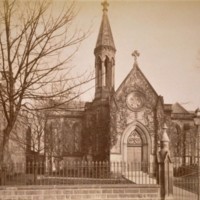 St Peter's Episcopal Church in Kirkcaldy in about 1880. An Episcopal church was built in Kirkcaldy in 1811 following the lifting of restrictions in the 1790s. The building shown here was built in 1844 and demolished in the 1970s. (Credit: University of St Andrews)
Following the death of Charles Edward Stuart, the leaders of the Scottish Episcopal Church agreed to support George III. After some argument, the…
 Bishop George Hay was the Roman Catholic leader responsible for Lowland Scotland in the late eighteenth century. In 1779 Hay's house in Edinburgh was burned during anti-Catholic protests. (Credit: G.A. Periam / Wikimedia)
Since the Reformation the Scottish government had banned Roman Catholic worship. In 1778 the British Parliament tried to reduce the restrictions on…
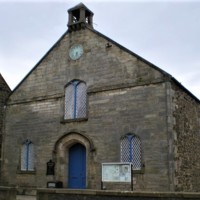 The modern parish church in Colinsburgh was built by a Relief Church congregation in the nineteenth century. It was probably on this site that the Relief Church first met in the 1760s. (Credit: Richard Law / Wikimedia)
During the 1750s and 1760s a dispute over the appointment of a new minister at Inverkeithing led to another split in the Church of Scotland. A group…
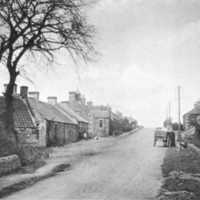 The village of Balmullo had an Anti-Burgher congregation in the 1740s. They may have met on the site of the building with a bell and a porch seen near the middle of this photograph from 1903. (Credit: University of St Andrews)
The new Secession Church had a number of internal divisions which came to a head in the late 1740s. A particular area of disagreement concerned…
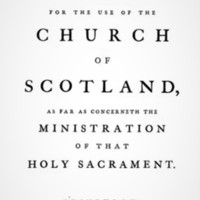 During the eighteenth century many Episcopal services were adapted from the Scottish Prayer Book of 1637. Revised selections from the Prayer Book were sometimes published. These were called 'wee bookies'. (Credit: John Dowden)
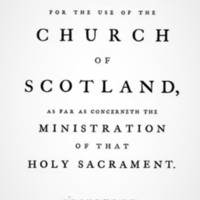 1746 Increased Restrictions on Episcopalians
Following the failed rebellion of 1745 and 1746 checks on Episcopalians increased. Episcopal ministers who failed to take an oath of loyalty were…
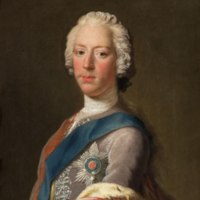
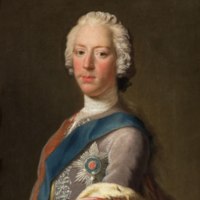 Prince Charles Edward Stuart, also known as the Young Pretender. Portrait by Allan Ramsey. (Credit: National Galleries of Scotland / Wikimedia)
 1745 – 1746 Jacobite Rising (The Forty-Five)
In August 1745 Charles Edward Stuart (sometimes called the Young Pretender) landed on the West Coast of Scotland. His arrival triggered a far-reaching…
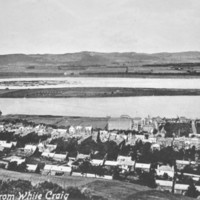 Newburgh was one of a number of Fife communities where people seceded from the Church of Scotland in the 1730s and 1740s. View across Newburgh and the River Tay in about 1894. (Credit: University of St Andrews)
Disagreements about the appointment of ministers and the role of powerful landowners as patrons led to a split in the Church of Scotland. A small…
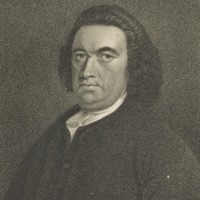 Portrait of John Glas, the founder of the Glasites. (Credit: National Galleries of Scotland)
During the 1720s the popular preacher John Glas (a graduate of the University of St Andrews and minister at Tealing near Dundee) put forward a series…
The placename Eglismartin (the ‘Church of (St) Martin’) in Easter Aberdour was first recorded in the fourteenth century. Names with the Eglis or…
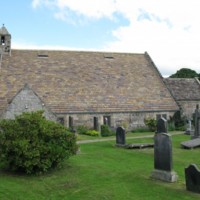 St Fillan's Church, Aberdour (Source: Richard Fawcett, 2012)
The parish church of Aberdour first appears in the records in the twelfth century when it was the subject of a dispute between a local lord, William…
James Douglas, 1st earl of Morton (d.1493) founded St Martha’s hospital in Aberdour in 1474. It was located close to a holy well dedicated to St…
James Douglas, earl of Morton (d.1493) founded St Martha’s hospital in Aberdour in 1474. However, by 1486 this project had not been realised, and the…
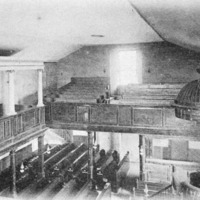 Aberdour Former Parish Church Interior (before 1926).
The location of the church so close to their country seat at Aberdour Castle had been a point of contention for the Douglas family for some time, and…
Shortly after the Great Disruption in 1843, a Free Church congregation was founded in Aberdour. They opened a church, called St Colme’s, in 1845,…
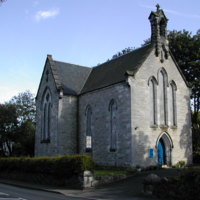 St Columba’s Episcopal Church, Aberdour
There is some debate as to when the Episcopal Church congregation was founded in Aberdour. In 1845 Hugh Ralph noted that there was one Episcopal…
In 1845 Hugh Ralph noted that one family in the parish belonged to the Roman Catholic Church, but it was not until 1971 that a RC congregation…
 Crail Kilwinning
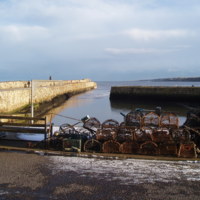 The old piers at St Andrews Harbour. In the 1520s this harbour was the focus for smuggling illicit religious publications into Scotland. (Credit: Bess Rhodes)
In 1517 the German academic Martin Luther published a series of criticisms of the Roman Catholic Church. Luther’s protest rapidly developed into an…
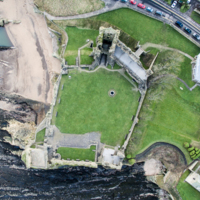 St Andrews Castle seen from the air. Before the Reformation the castle was the residence of the Archbishops of St Andrews. (Credit: Open Virtual Worlds / University of St Andrews)
In the spring of 1546 the Roman Catholic archbishop of St Andrews, Cardinal David Beaton, was assassinated by a group of Fife lairds who opposed his…
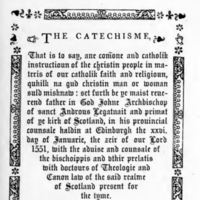 The title page of Archbishop Hamilton's 'Catechism'. This was the first book ever printed in Fife. (Credit: Internet Archive)
During the 1550s a number of Roman Catholics worked to bring improvements to the Church in Scotland. Fife was at the heart of this movement, which was…
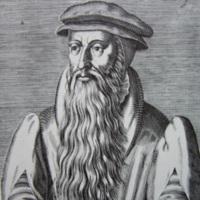 John Knox - one of best known Protestant preachers in Reformation Scotland. (Credit: Wikimedia)
In the spring and summer of 1559 Protestant activists set out to ‘reform’ Roman Catholic churches. Influenced by strict Calvinist ideas on the…
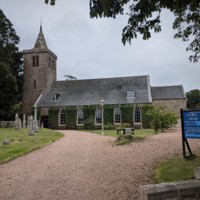 The Collegiate Church at Crail was reformed in June 1559, shortly before the Protestants descended on the religious capital of St Andrews. (Credit: Open Virtual Worlds / University of St Andrews)
 Holy Trinity Church in St Andrews. This image shows the church in the eighteenth century. The medieval stained glass has been removed and several windows partly blocked up to fit with Reformed ideas on church design. (Credit: University of St Andrews)
The Reformation Parliament of 1560 saw Scotland officially declared a Protestant country. However, it took time to establish the structures of a…
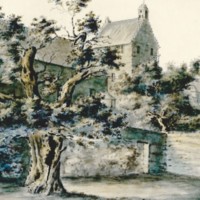 An eighteenth-century painting of St Mary's College in the University of St Andrews. John Douglas was for many years a member of St Mary's. (Credit: University of St Andrews)
For many years there were bitter debates about how the new Protestant Church of Scotland should be governed. In the 1560s each region had a…
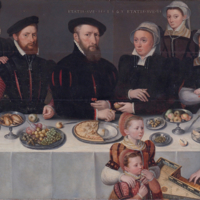 The family of a wine-merchant in Antwerp enjoy a celebratory meal in the 1560s. In Scotland feasting and taking time off from work at Christmas came to be a punishable offence in the years after the Reformation. (Credit: Rijksmuseum / Wikimedia)
By the 1570s the Church of Scotland was adopting an increasingly hard line on religious festivals. In particular there was a campaign against…
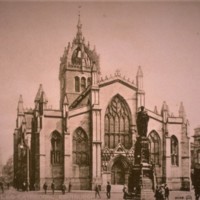 During the 1590s the Scottish Parliament usually met in St Giles' Kirk in Edinburgh. This photograph shows St Giles' in the 1870s. (Credit: University of St Andrews)
The later decades of the sixteenth century saw ongoing tensions about how radical the Church of Scotland should be. Many of these arguments became…
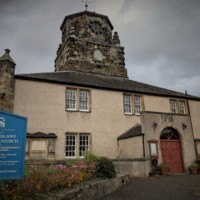 Burntisland Parish Church was one of the first churches built in Fife after the Reformation. It was designed for listeners to be able to focus on the preaching and formed a major departure from the traditional layout of churches. (Credit: Open Virtual Worlds / University of St Andrews)
Reading the Bible formed a vital part of Protestant religious activity. In particular Protestants believed that people should have access to the Bible…
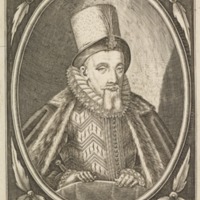 An anonymous engraving of King James VI and I. (Credit: National Galleries of Scotland)
As he grew older King James VI became opposed to the relatively democratic government of the Church of Scotland. He had bitter disputes with what he…
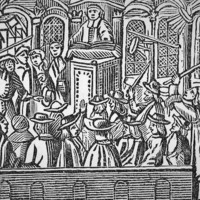 A woodcut showing protestors objecting to Archbishop Spottiswoode's efforts to introduce the Scottish Prayer Book. (Credit: Wikimedia)
The 1630s saw growing tensions about religion in Scotland. At this time King Charles I tried to bring the Church of Scotland more in line with English…
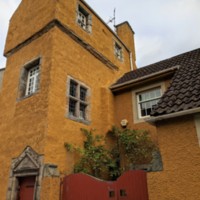 An early seventeenth-century house in Inverkeithing. In July 1651 there was a battle fought just to the south of Inverkeithing between English Parliamentarians and Scottish supporters of Charles II. (Credit: Open Virtual Worlds / University of St Andrews)
In 1639 Scotland slipped into religious war. Supporters of the National Covenant (sometimes known as Covenanters) took up arms in defence of their…
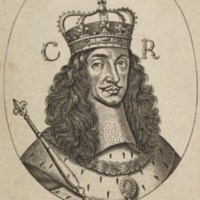 An engraving of King Charles II by William Fairthorne. (Credit: National Galleries of Scotland)
In 1660 the English invited Charles II to return as king. Shortly afterwards Charles set about overturning the religious changes of the previous…
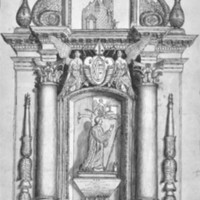 An eighteenth-century drawing of the monument to Archbishop Sharp in Holy Trinity Church, St Andrews. A relief near the base of the monument shows the archbishop's murder. (Credit: University of St Andrews)
Archbishop James Sharp was a divisive religious leader. Many Presbyterians felt that he had sold out the Church of Scotland by agreeing to become…
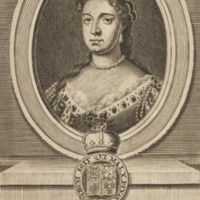 An anonymous engraving of Queen Mary II. With her husband William of Orange, Mary authorised the restoration of Presbyterianism in Scotland. (Credit: National Galleries of Scotland)
In 1689 King James VII was replaced as ruler of Scotland by his daughter Mary and her husband William of Orange. Soon afterwards the Scottish…
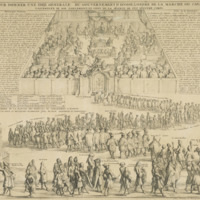 A late seventeenth-century French engraving of the Scottish Parliament. The different estates which made up the parliament are shown in procession at the bottom of the page and sitting at the top. (Credit: National Galleries of Scotland)
Many of Fife’s Episcopal clergymen were removed from their parishes by the restoration of Presbyterianism. In 1695 the Scottish Parliament passed a…
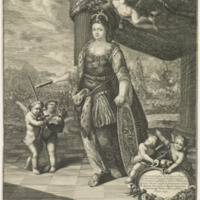 Engraving of Queen Anne by J.C. Marchand. Anne was the first ruler of the newly created United Kingdom. (Credit: National Galleries of Scotland)
After much debate, the parliaments of Scotland and England passed legislation to create a new Kingdom of Great Britain. The Scottish Parliament in…
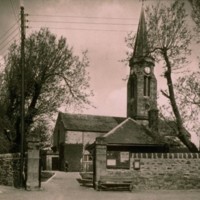 Kingsbarns Parish Church in the early twentieth century. During the 1730s Kingsbarns became the scene of a dispute between the congregation and the patron of the parish over the appointment of a new minister. (Credit: University of St Andrews)
Lobbying from Scottish aristocrats led to the passing of the Church Patronage Act. This stated that the old patrons of Scottish parishes (typically…
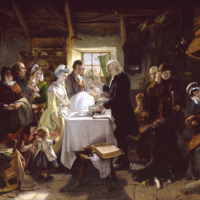 The Victorian artist John Philip imagines an eighteenth-century Scottish baptism in a private house. (Credit: Aberdeen Art Gallery)
The British government was initially more tolerant of Episcopalians than the Scottish Parliament had been. In 1711 the laws against Episcopal…
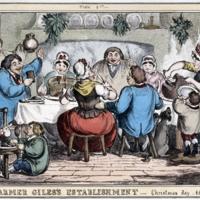 An English cartoon by William Heath making fun of Christmas festivities in the countryside in about 1800. (Credit: The Board of Trustees of the Science Museum, London)
When Presbyterianism was re-established in 1690 the Scottish Parliament also passed legislation banning Christmas. In 1712 this ban was lifted and the…
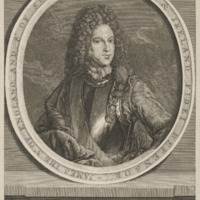 An engraving of James Francis Edward Stuart (also known as the Old Pretender). In normal circumstances James would have been king of Scotland and England but legislation was passed banning Roman Catholics from the throne. (Credit: National Galleries of Scotland)
The accession of George I to the British throne was soon followed by a rebellion backing James Francis Edward Stuart’s claim to be king instead. James…
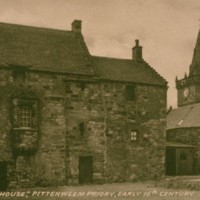 Photograph of Pittenweem Priory in the 1940s. One of the priory outbuildings was home to an eighteenth-century Episcopal congregation. (Credit: University of St Andrews)
After the Jacobite rising of 1715 the British government became increasingly suspicious of Scottish Episcopalians. Ministers in the Scottish Episcopal…
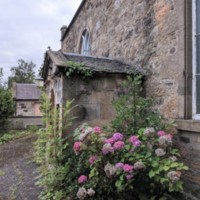 St John's Church in Inverkeithing has its origins in an eighteenth-century burgher congregation. In 1847 the congregation of St John's joined the United Presbyterians. The congregation later became Church of Scotland. (Credit: Open Virtual Worlds / University of St Andrews)
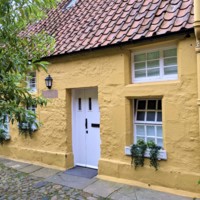 The former burgher kirk on Imrie’s Close. (Source: Open Virtual Worlds / University of St Andrews)
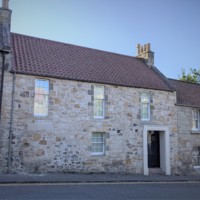 The former Christian Brethren Hall on Greenside Place. (Source: Open Virtual Worlds / University of St Andrews)
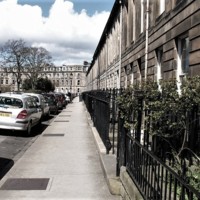 Hope Street and Howard Place in St Andrews near to the Friends Meeting House. (Source: Jim Bain / Wikimedia)
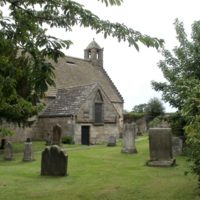 St Fillan's Church, Aberdour (Source: Bess Rhodes 2021)
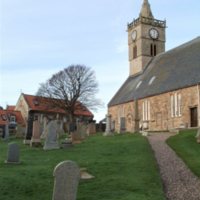 Anstruther Easter Parish Church (Source: Bess Rhodes 2021)
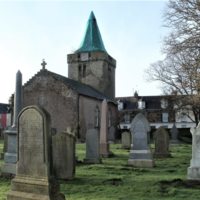 Anstruther Wester (Source: Bess Rhodes 2021)
Although Culross only enters the written record in the 1200s, it is clear from archaeological evidence that a community had existed there long before…
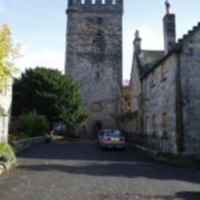 Culross Abbey Tower (Source: Bess Rhodes 2021)
The Abbey of Culross was founded in 1217 by Maol Choluim I, Earl of Fife (1204–1228), who was himself buried in the church in 1228x1229. Dedicated to…
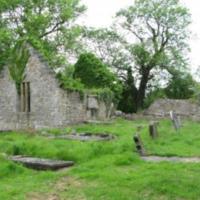 Culross Church Exterior (Source Fawcett, 2011)
The old parish church of Culross lies around 800 metres to the north west of the burgh. It was first recorded in 1217 when it was gifted to the monks…
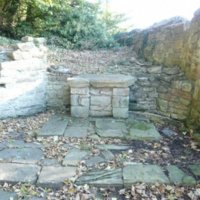 St Mungo’s Chapel (Source: Ewan Malecki (October 2007).
The chapel of St Kentigern in Culross was founded in 1503 by Robert Blacadder, Archbishop of Glasgow (1484-1508). Kentigern, or Mungo as he is…
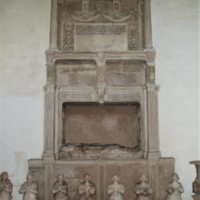 Bruce of Culross and Carnock Monument (Source: Bess Rhodes)
Shortly after the Reformation, the presbytery, transepts choir and tower of the Abbey were converted into the parish church of Culross. This situation…
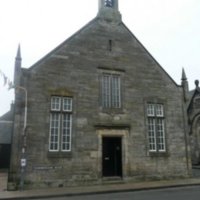 Culross Free Church (Source: Amanda Gow, 2007).
The Free Church in Culross was formed in 1846, and in the following year, with the support Mr Cunninghame of Balgownie, a church was built on the Low…
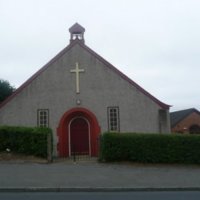 St Serf’s Roman Catholic Church (Source: Amanda Gow, 2007)
St Serf’s Roman Catholic Church was built in 1922 after the opening of new pits at Valleyfield and Blairhall in the early twentieth century saw a…
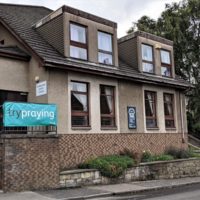
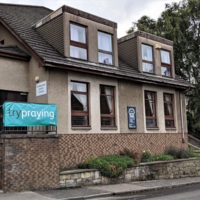 Inverkeithing Baptist Church (Source: Bess Rhodes)
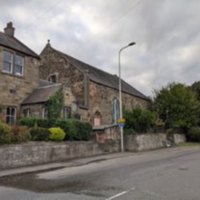
 Inverkeithing Episcopal Church (Source: Bess Rhodes)
 St John's, Inverkeithing (Source: Bess Rhodes)
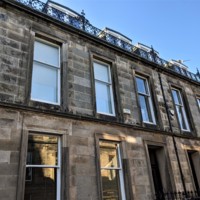 The Meeting House for the Society of Friends on Howard Place. (Source: Open Virtual Worlds / University of St Andrews)
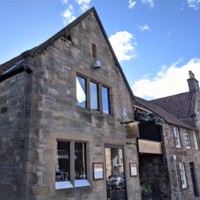 The former Salvation Army Hall on North Street, now a restaurant known as ‘The Rav’. (Source: Open Virtual Worlds / University of St Andrews)
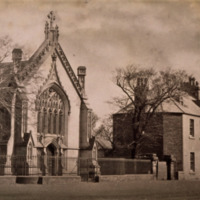 St Andrew’s Chapel in about 1865. (Source: University of St Andrews Library, ALB-10-62.)