Browse Items (658 total)
In 1952 Alexander Smith listed a number what he described as Other religious bodies in Methil, including a Gospel Hall, the Central Gospel Mission and…
Shortly after the start of World War II a small chapel was built in Methil Docks to cater to the dock personnel and those involved in war production…
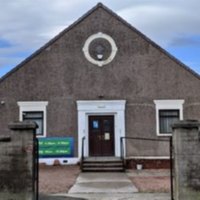 Methil Evangelical Church (Source; Bess Rhodes)
In 1931, some 300 years after the closure of the parish church in Methilhill, a new Church of Scotland parish church was constructed on Chemiss Road,…
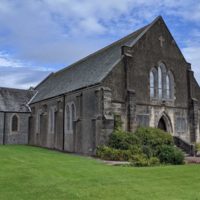 Methil and Denbeath Parish Church (Source: Bess Rhodes)
In the early 1920s the steady growth of the population of the town led the Church of Scotland to construct a new parish church in Methil to replace…
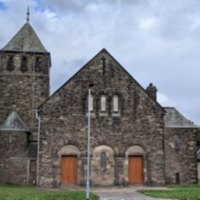 Wellesley Parish Church, Methil (Source: Bess Rhodes)
Nearly four centuries after the Protestant Reformation, a Roman Catholic congregation returned to Methil with the opening of a church in 1903. Located…
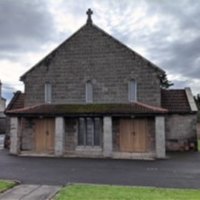 St Agatha’s Roman Catholic Church, Methil (Source: Bess Rhodes)
As a result of the large numbers of German sailors visiting Methil annually in the late nineteenth century a missionary from the German Church in…
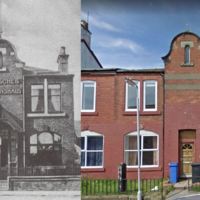 German Seaman’s Mission (Source: Vintage Lundin Links and Largo).
Following the Great Disruption in 1843, a quod sacra Free Church parish was set up in Methil, before a full mission was established in 1852. The…
The Scottish Coastal Mission, founded in 1850, was a Protestant organisation dedicated to ministering to sailors and maritime communities. By 1861…
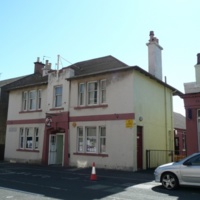 Scottish Coast Mission (Source: Places of Worship in Scotland)
From the early 1600s to 1838 Methil was part of the parish of Wemyss and the congregation attended the church in Easter Wemyss. Following an increase…
The church of the medieval parish of Methil (spelt Methilkil or Methilhill) was located inland, on the banks of the River Leven about a mile and a…
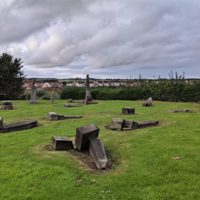 Methil Hill Cemetery (Source: Bess Rhodes 2021)
On the coast a little way north of the burgh of Crail (near Crail Airfield) is land known as Kilminning. This name is thought to derive from the…
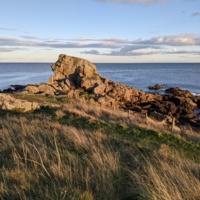 The coast at Kilminning. Remains of what may have been an early chapel have been discovered in this area. (Source: Open Virtual Worlds / University of St Andrews.)
Towards the end of the 1840s the Free Church congregation in Crail built a church on the road then known as Jockeys Port (now called St Andrews Road).…
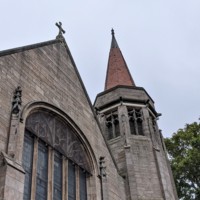 The west gable of Crail Community Hall – formerly St David’s Church. (Source: Open Virtual Worlds / University of St Andrews.)
The early nineteenth century saw major divisions in the Church of Scotland over secular interference in religious affairs. In the 1840s a large number…
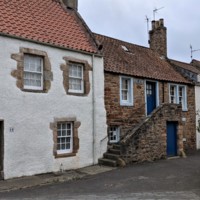 Houses on Rose Wynd in 2021. (Source: Open Virtual Worlds / University of St Andrews.)
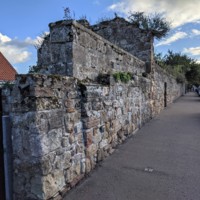 The site of the supposed ‘nunnery’ on Nethergate – perhaps in reality a medieval chapel. (Source: Open Virtual Worlds / University of St Andrews.)
A plot of land on the south side of the Nethergate in Crail has long been known as ‘The Nunnery’. However, written records suggest that there was at…
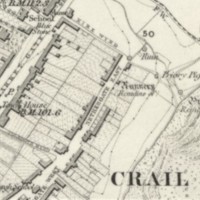 The site of the supposed ‘nunnery’ on Nethergate – perhaps in reality a medieval chapel. (Source: 1855 Ordnance Survey Map of Fife, sheet 20. Available at: https://maps.nls.uk/view/74426837)
By the late eighteenth century there was a tradition in Crail that there had once been a medieval priory by the sea, a little to the south of what is…
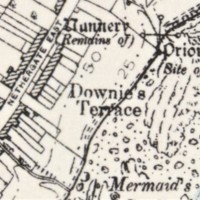 The site of the supposed ‘priory’ ruins. (Source: 1895 Ordnance Survey Map of Fife and Kinross, sheet XXIII. Available at: https://maps.nls.uk/view/75533145)
The site now occupied by Holy Trinity Church has been a place of worship for several different denominations. A church was built here in the 1790s for…
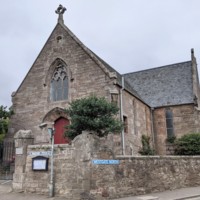 Holy Trinity Church in 2021. (Source: Open Virtual Worlds / University of St Andrews.)
When the Church of Scotland adopted Presbyterianism at the start of the 1690s a number of ministers refused to support the change. The minister of…
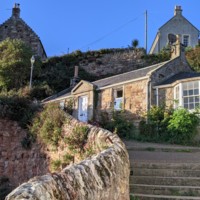 Bankhead Brae in Crail. An Episcopal chapel was located in this area during the early eighteenth century. (Source: Open Virtual Worlds / University of St Andrews.)
The parish church at Crail has been a place of worship since at least the twelfth century. During the reign of Malcolm IV (who died in 1165) revenues…
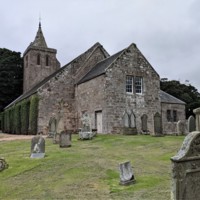 Crail Parish Church in 2021. Marks from the changing rooflines of the church over the centuries can be seen on the tower and end wall of the nave. (Source: Open Virtual Worlds / University of St Andrews.)
There appears to have been a castle at Crail by the middle of the twelfth century. In 1359 the castle chapel is described as being dedicated to St…
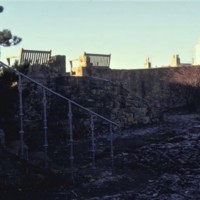 A section of old masonry which perhaps formed part of Crail Castle. (Source: William Jack / University of St Andrews Library, WMJ-EN-115-2.)
During the First World War an airfield was built at Crail, but the site was abandoned following the end of hostilities. At the start of the Second…
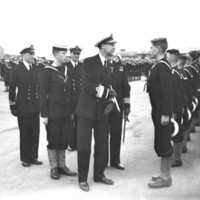 A naval inspection at Crail Airfield in the early 1940s. (Source: University of St Andrews Library, GMC-5-16-17.)
The United Secession Church had its origins in the splits within the Church of Scotland in the eighteenth century. The congregation worshipped for…
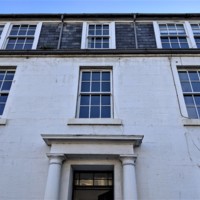 The former United Secession Church on North Street. (Open Virtual Worlds / University of St Andrews)
St Salvator’s College was established in the 1450s by Bishop James Kennedy. The new university college was dedicated to Christ the Saviour, and was…
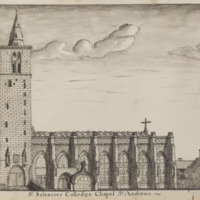 St Salvator’s Chapel in about 1767. Some of the original windows have been partly blocked up, others are covered with shutters. The medieval stone roof can still be seen. (Source: University of St Andrews Library, OLI-11.)
The building now known as St Rule’s Church originally served as St Andrews Cathedral. The church was probably built on the orders of Bishop Robert…
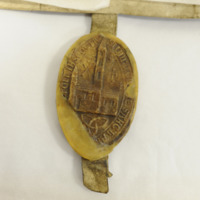 Seal of St Andrews Cathedral Priory showing St Rule’s Church. The now demolished nave and west frontage can be seen on the left side of the seal. (Source: University of St Andrews Library)
We do not know exactly when St Peter’s Chapel was founded. However, in 1212 there was a reference to ‘two houses by the sea beside the chapel of St…
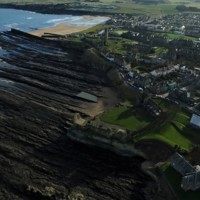 The coastline of St Andrews from the air. St Peter’s Chapel may have stood in the area a little to the right of centre of this image. (Source: Open Virtual Worlds / University of St Andrews))
The hospital of St Nicholas was founded as a refuge for lepers in the twelfth century. Because of fears of infection it stood a little to the south of…
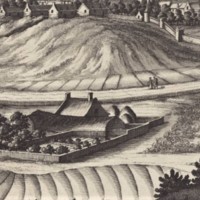 The former St Nicholas Hospital in the late seventeenth century. (Source: John Slezer, ‘The Prospect of the Town of St Andrews’, Theatrum Scotiae (1693). Available at: https://maps.nls.uk/view/91169135)
The ruins of the medieval church of St Mary’s on the Rock (also called St Mary’s Kirkhill) stand on the cliffs looking out over the North Sea. This…
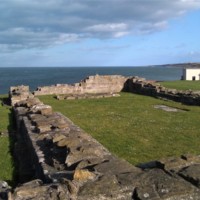 The remains of St Mary’s on the Rock. (Source: Open Virtual Worlds / University of St Andrews)
The site of St Mary’s College on South Street has lengthy associations with religion and learning. In 1419 Robert de Montrose (one of the priests who…
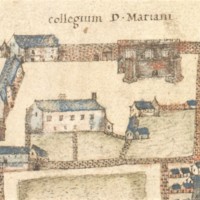 The roofless former chapel of St Mary’s College can be seen in this detail from the Geddy Map of c. 1580. (Source: John Geddy, ‘S. Andrew sive Andreapolis Scotiae Universitas Metropolitana’. NLS, MS.20996. Available at: http://maps.nls.uk/towns/rec/215)
During the early nineteenth century the parish church of Holy Trinity on South Street became too small for the growing population of St Andrews. To…
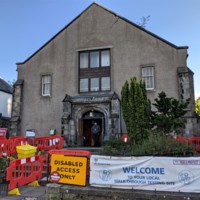 The former St Mary’s Church building, now the Victory Memorial Hall. This image shows the hall during the Covid-19 pandemic when it was in use as testing site. (Source: Open Virtual Worlds / University St Andrews)
Little is known about the medieval chapel of St Mary Magdalene. Sixteenth-century property records indicate that it was located within the cathedral…
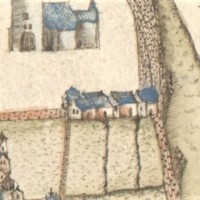 The line of smaller buildings on the lower right of this image may include the Chapel of St Mary Magdalene. Detail from the Geddy Map of c. 1580. (Source: John Geddy, ‘S. Andrew sive Andreapolis Scotiae Universitas Metropolitana’. NLS, MS.20996. Available at: http://maps.nls.uk/towns/rec/215)
The parish of St Leonard’s has its origins in the Middle Ages. However, the congregation has only worshipped in the current St Leonard’s Church on…
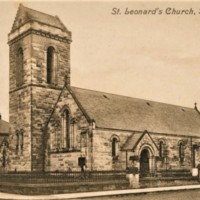 The newly built St Leonard’s Church in about 1904. (Source: University of St Andrews Library, JV44554.)
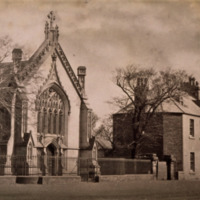 St Andrew’s Chapel in about 1865. (Source: University of St Andrews Library, ALB-10-62.)
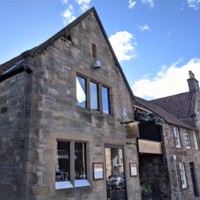 The former Salvation Army Hall on North Street, now a restaurant known as ‘The Rav’. (Source: Open Virtual Worlds / University of St Andrews)
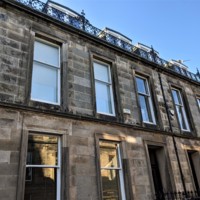 The Meeting House for the Society of Friends on Howard Place. (Source: Open Virtual Worlds / University of St Andrews)
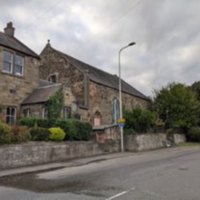 St John's, Inverkeithing (Source: Bess Rhodes)
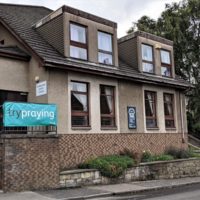 Inverkeithing Episcopal Church (Source: Bess Rhodes)
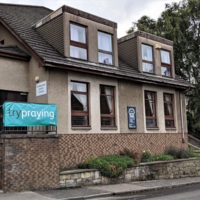 Inverkeithing Baptist Church (Source: Bess Rhodes)
St Serf’s Roman Catholic Church was built in 1922 after the opening of new pits at Valleyfield and Blairhall in the early twentieth century saw a…
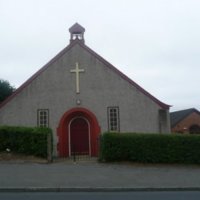 St Serf’s Roman Catholic Church (Source: Amanda Gow, 2007)
The Free Church in Culross was formed in 1846, and in the following year, with the support Mr Cunninghame of Balgownie, a church was built on the Low…
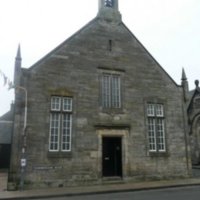 Culross Free Church (Source: Amanda Gow, 2007).
Shortly after the Reformation, the presbytery, transepts choir and tower of the Abbey were converted into the parish church of Culross. This situation…
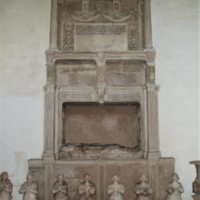 Bruce of Culross and Carnock Monument (Source: Bess Rhodes)
The chapel of St Kentigern in Culross was founded in 1503 by Robert Blacadder, Archbishop of Glasgow (1484-1508). Kentigern, or Mungo as he is…
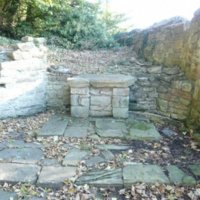 St Mungo’s Chapel (Source: Ewan Malecki (October 2007).
The old parish church of Culross lies around 800 metres to the north west of the burgh. It was first recorded in 1217 when it was gifted to the monks…
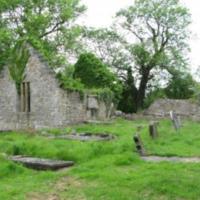 Culross Church Exterior (Source Fawcett, 2011)
The Abbey of Culross was founded in 1217 by Maol Choluim I, Earl of Fife (1204–1228), who was himself buried in the church in 1228x1229. Dedicated to…
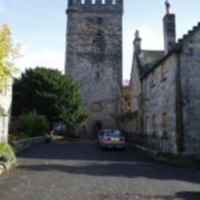 Culross Abbey Tower (Source: Bess Rhodes 2021)
Although Culross only enters the written record in the 1200s, it is clear from archaeological evidence that a community had existed there long before…
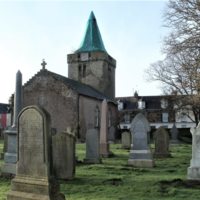 Anstruther Wester (Source: Bess Rhodes 2021)
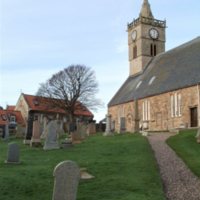 Anstruther Easter Parish Church (Source: Bess Rhodes 2021)
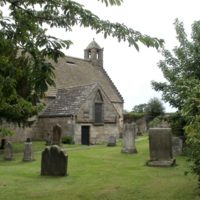 St Fillan's Church, Aberdour (Source: Bess Rhodes 2021)
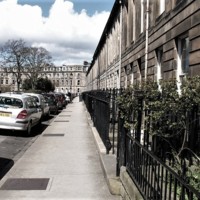 Hope Street and Howard Place in St Andrews near to the Friends Meeting House. (Source: Jim Bain / Wikimedia)
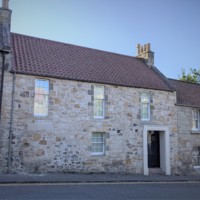 The former Christian Brethren Hall on Greenside Place. (Source: Open Virtual Worlds / University of St Andrews)
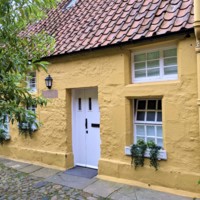 The former burgher kirk on Imrie’s Close. (Source: Open Virtual Worlds / University of St Andrews)
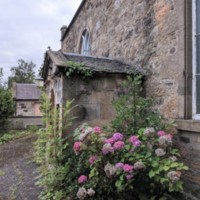 St John's Church in Inverkeithing has its origins in an eighteenth-century burgher congregation. In 1847 the congregation of St John's joined the United Presbyterians. The congregation later became Church of Scotland. (Credit: Open Virtual Worlds / University of St Andrews)
After the Jacobite rising of 1715 the British government became increasingly suspicious of Scottish Episcopalians. Ministers in the Scottish Episcopal…
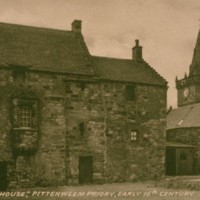 Photograph of Pittenweem Priory in the 1940s. One of the priory outbuildings was home to an eighteenth-century Episcopal congregation. (Credit: University of St Andrews)
The accession of George I to the British throne was soon followed by a rebellion backing James Francis Edward Stuart’s claim to be king instead. James…
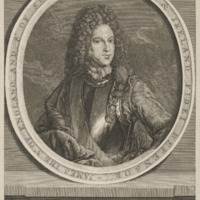 An engraving of James Francis Edward Stuart (also known as the Old Pretender). In normal circumstances James would have been king of Scotland and England but legislation was passed banning Roman Catholics from the throne. (Credit: National Galleries of Scotland)
When Presbyterianism was re-established in 1690 the Scottish Parliament also passed legislation banning Christmas. In 1712 this ban was lifted and the…
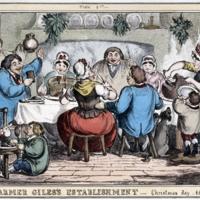 An English cartoon by William Heath making fun of Christmas festivities in the countryside in about 1800. (Credit: The Board of Trustees of the Science Museum, London)
The British government was initially more tolerant of Episcopalians than the Scottish Parliament had been. In 1711 the laws against Episcopal…
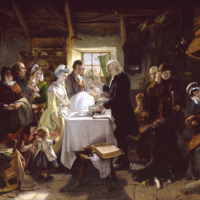 The Victorian artist John Philip imagines an eighteenth-century Scottish baptism in a private house. (Credit: Aberdeen Art Gallery)
Lobbying from Scottish aristocrats led to the passing of the Church Patronage Act. This stated that the old patrons of Scottish parishes (typically…
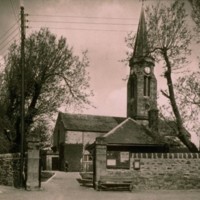 Kingsbarns Parish Church in the early twentieth century. During the 1730s Kingsbarns became the scene of a dispute between the congregation and the patron of the parish over the appointment of a new minister. (Credit: University of St Andrews)
After much debate, the parliaments of Scotland and England passed legislation to create a new Kingdom of Great Britain. The Scottish Parliament in…
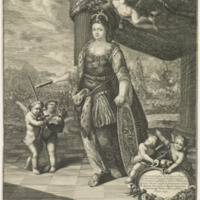 Engraving of Queen Anne by J.C. Marchand. Anne was the first ruler of the newly created United Kingdom. (Credit: National Galleries of Scotland)
Many of Fife’s Episcopal clergymen were removed from their parishes by the restoration of Presbyterianism. In 1695 the Scottish Parliament passed a…
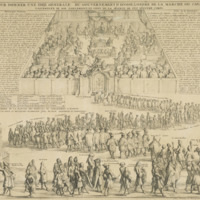 A late seventeenth-century French engraving of the Scottish Parliament. The different estates which made up the parliament are shown in procession at the bottom of the page and sitting at the top. (Credit: National Galleries of Scotland)
In 1689 King James VII was replaced as ruler of Scotland by his daughter Mary and her husband William of Orange. Soon afterwards the Scottish…
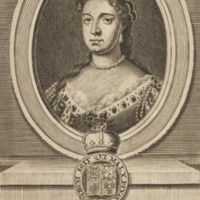 An anonymous engraving of Queen Mary II. With her husband William of Orange, Mary authorised the restoration of Presbyterianism in Scotland. (Credit: National Galleries of Scotland)