Browse Items (658 total)
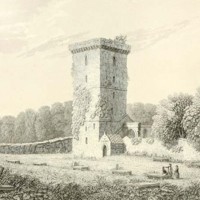 (1) Engraving of the Old Church of St Serf’s, 1853 (Source: William Muir, ed, Notices of the Local Records of Dysart (Glasgow: Maitland Club 1853), p. 22.
By the late eighteenth century there was a tradition in Crail that there had once been a medieval priory by the sea, a little to the south of what is…
A plot of land on the south side of the Nethergate in Crail has long been known as ‘The Nunnery’. However, written records suggest that there was at…
In 1215 the Fourth Lateran Council officially declared the Roman Catholic Church’s belief in the doctrine of purgatory. This was the idea that most…
Queen Margaret (the wife of Malcolm III) seems to have been regarded as a saint by the residents of Fife soon after her death in 1093. Miracles were…
The origins of the close connection between St Andrew and the people of Scotland go back into the early Middle Ages. However, during the wars between…
During the thirteenth century some people felt that monasteries had become too wealthy. In response new religious orders of friars were created. The…
In 1349 the Black Death (probably a severe epidemic of bubonic plague) reached Fife. Churchmen were particularly likely to catch the disease as they…
In the 1360s King David II spent a large amount of money rebuilding the church at St Monans. The king did this because in 1346 he had survived being…
During the late Middle Ages universities increasingly took over responsiblity for higher education. In 1410 a group of churchmen established a…
In the early 1430s a doctor named Pavel Kravar (sometimes known as Paul Craw in Scotland) was burned for heresy in the centre of St Andrews. Kravar…
Like many religious orders, the Franciscans (or grey friars) grew slightly less strict over time. This concerned some people, and led to the…
The bishops of St Andrews had for centuries claimed to be the most important churchmen in Scotland. In 1472 their special status was officially…
Between the 1520s and the 1550s the Roman Catholic authorities in Fife severely punished a number of Protestant sympathisers. No less than four…
The 1540s saw fighting between Scotland and England. The conflict was partly driven by the English government’s wish to arrange a marriage between…
In the spring of 1546 the Roman Catholic archbishop of St Andrews, Cardinal David Beaton, was assassinated by a group of Fife lairds who opposed his…
In the spring and summer of 1559 Protestant activists set out to ‘reform’ Roman Catholic churches. Influenced by strict Calvinist ideas on the…
For many years there were bitter debates about how the new Protestant Church of Scotland should be governed. In the 1560s each region had a…
By the 1570s the Church of Scotland was adopting an increasingly hard line on religious festivals. In particular there was a campaign against…
The later decades of the sixteenth century saw ongoing tensions about how radical the Church of Scotland should be. Many of these arguments became…
Reading the Bible formed a vital part of Protestant religious activity. In particular Protestants believed that people should have access to the Bible…
As he grew older King James VI became opposed to the relatively democratic government of the Church of Scotland. He had bitter disputes with what he…
The 1630s saw growing tensions about religion in Scotland. At this time King Charles I tried to bring the Church of Scotland more in line with English…
In 1639 Scotland slipped into religious war. Supporters of the National Covenant (sometimes known as Covenanters) took up arms in defence of their…
In 1660 the English invited Charles II to return as king. Shortly afterwards Charles set about overturning the religious changes of the previous…
Archbishop James Sharp was a divisive religious leader. Many Presbyterians felt that he had sold out the Church of Scotland by agreeing to become…
In 1689 King James VII was replaced as ruler of Scotland by his daughter Mary and her husband William of Orange. Soon afterwards the Scottish…
Many of Fife’s Episcopal clergymen were removed from their parishes by the restoration of Presbyterianism. In 1695 the Scottish Parliament passed a…
After much debate, the parliaments of Scotland and England passed legislation to create a new Kingdom of Great Britain. The Scottish Parliament in…
Lobbying from Scottish aristocrats led to the passing of the Church Patronage Act. This stated that the old patrons of Scottish parishes (typically…
The British government was initially more tolerant of Episcopalians than the Scottish Parliament had been. In 1711 the laws against Episcopal…
When Presbyterianism was re-established in 1690 the Scottish Parliament also passed legislation banning Christmas. In 1712 this ban was lifted and the…
The accession of George I to the British throne was soon followed by a rebellion backing James Francis Edward Stuart’s claim to be king instead. James…
After the Jacobite rising of 1715 the British government became increasingly suspicious of Scottish Episcopalians. Ministers in the Scottish Episcopal…
During the 1720s the popular preacher John Glas (a graduate of the University of St Andrews and minister at Tealing near Dundee) put forward a series…
Disagreements about the appointment of ministers and the role of powerful landowners as patrons led to a split in the Church of Scotland. A small…
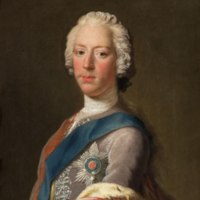 1745 – 1746 Jacobite Rising (The Forty-Five)
In August 1745 Charles Edward Stuart (sometimes called the Young Pretender) landed on the West Coast of Scotland. His arrival triggered a far-reaching…
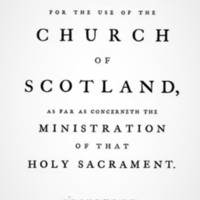 1746 Increased Restrictions on Episcopalians
Following the failed rebellion of 1745 and 1746 checks on Episcopalians increased. Episcopal ministers who failed to take an oath of loyalty were…
The new Secession Church had a number of internal divisions which came to a head in the late 1740s. A particular area of disagreement concerned…
During the 1750s and 1760s a dispute over the appointment of a new minister at Inverkeithing led to another split in the Church of Scotland. A group…
Since the Reformation the Scottish government had banned Roman Catholic worship. In 1778 the British Parliament tried to reduce the restrictions on…
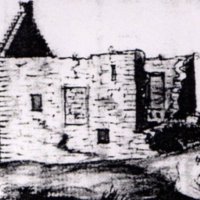 1780 drawing of the chapel. (Source: Anne Watters, Kirkcaldy's Churches: Brief Histories)
Following the death of Charles Edward Stuart, the leaders of the Scottish Episcopal Church agreed to support George III. After some argument, the…
In the early 1790s the British Parliament decided to resolve the status of Roman Catholics in Scotland. More than a decade after the harshest…
After more than seventy years of disagreement (largely focusing on the relationship between church and state) most members of the Burgher Church…
After more than seventy years of disagreement (largely focusing on the relationship between church and state) most members of the Burgher Church…
In 1829 the British Parliament passed legislation lifting most restrictions on Roman Catholics. Among other new freedoms, Roman Catholics were now…
For more than a century there had been divisions in the Church of Scotland over how appointments were made and the relationship between church and…
While the Church of Scotland was splitting again, some groups of seceders were joining together. In 1847 the United Secession Church and the Relief…
For some decades there had been debates about the fact that clergy ordained by Scottish Episcopal bishops could not legally be appointed to positions…
Since the early 1700s the role of lay patrons in church appointments had been a major cause of discontent in the Church of Scotland, and had triggered…
As discrimination against Roman Catholics reduced, the Papacy decided to re-establish a traditional church hierarchy in Scotland. Six Roman Catholic…
For several centuries the University of St Andrews had not celebrated Christmas. However, in 1887 the university decided to have a communal Christmas…
The eighteenth and nineteenth centuries had seen several groups leave the Church of Scotland. In 1900 two of the largest of these break-away…
Thousands of Fife residents served in the armed forces during the First World War. Many were killed. After the war communities across Fife put up…
After centuries of the controversy about the relationship between church and state, the British Parliament passed the Church of Scotland Act. This…
At a joint assembly in Edinburgh the United Free Church agreed to merge with the Church of Scotland. This meant that many places in Fife now had…
During the Second World War the armed forces expanded and many people moved around the country. New places of worship were established in Fife for…
During the nineteenth and twentieth centuries Presbyterian opposition to Christmas reduced. In 1958 Christmas became a public holiday in Scotland.…
The Second Vatican Council (held in the Vatican in Rome) sought to modernise Roman Catholicism. It agreed major changes to Roman Catholic worship. One…
Since the sixteenth century there had been no cardinals resident in Scotland. However, in 1969 Gordon Gray, the Roman Catholic Archbishop of St…
In the late 1960s the General Assembly of the Church of Scotland agreed that women could be ordained as ministers on the same terms as men. The first…
 6 Case Studies
St Andrews was an important religious centre from an early date. There seems to have already been a monastery here in 747 when the death of the abbot…
By the tenth century St Andrews had become one of the most important churches in the kingdom of the Scots. In 965 the brother of the King of Tara died…
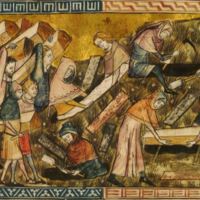 A fourteenth-century illustration of plague burials in Tournai. Similarly rushed burials probably took place in Fife. (Credit: Pierart dou Tielt / Wikimedia)
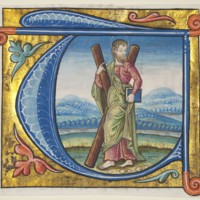 A late medieval image of St Andrew with his traditional X-shaped cross. (Credit: University of St Andrews)
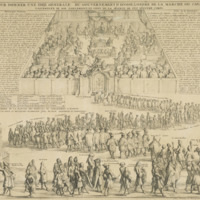 A late seventeenth-century French engraving of the Scottish Parliament. The different estates which made up the parliament are shown in procession at the bottom of the page and sitting at the top. (Credit: National Galleries of Scotland)
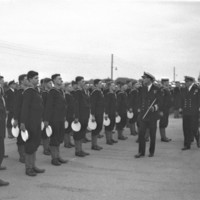 A naval inspection at Crail Aerodrome in about 1940. Early in the Second World War a chapel was built at Crail Airfield for the service personnel. (Credit: George Cowie / University of St Andrews)
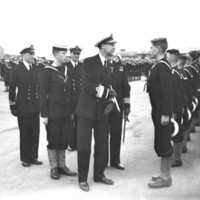 A naval inspection at Crail Airfield in the early 1940s. (Source: University of St Andrews Library, GMC-5-16-17.)
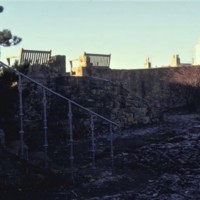 A section of old masonry which perhaps formed part of Crail Castle. (Source: William Jack / University of St Andrews Library, WMJ-EN-115-2.)
 A video showing how St Andrews Cathedral may have appeared in 1318. (Source: Open Virtual Worlds / Smart History)
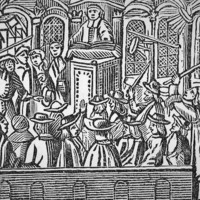 A woodcut showing protestors objecting to Archbishop Spottiswoode's efforts to introduce the Scottish Prayer Book. (Credit: Wikimedia)
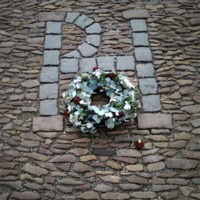 A wreath and the letters PH marking the site of Patrick Hamilton's execution on North Street in St Andrews. (Credit: Bess Rhodes)
The Abbey of Culross was founded in 1217 by Maol Choluim I, Earl of Fife (1204–1228), who was himself buried in the church in 1228x1229. Dedicated to…
Abdie and Dunbog Parish Church opened its doors in 1827. It was built to replace Abdie’s medieval parish church. The architects for the new building…
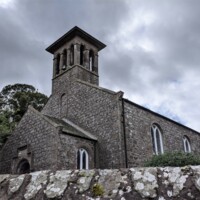 Abdie and Dunbog Parish Church (Bess Rhodes).
There has been a parish church at Abdie since at least the 1190s. For most of the Middle Ages the rectorship of Abdie was held by Lindores Abbey. The…
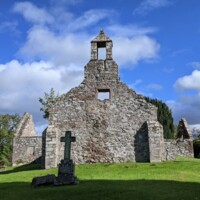 Abdie Old Parish Church (Bess Rhodes).
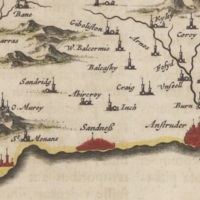 Abercrombie Church
St Monans and Abercrombie [Abircroy] on J. Blaeu’s map of Eastern Fife, 1654. (National Library of Scotland)
The former parish church of Abercrombie is first recorded around 1160. During the Middle Ages both Dunfermline Abbey and Culross Abbey had rights…
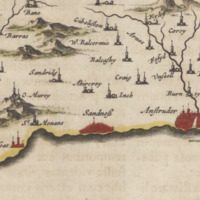 Abercrombie map
St Monans and Abercrombie [Abircroy] on J. Blaeu’s map of Eastern Fife, 1654.
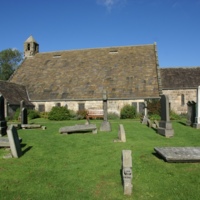 Aberdour
Aberdour (/ˌæbərˈdaʊər/ (About this soundlisten); Scots: Aiberdour,[2] Scottish Gaelic: Obar Dobhair) is a scenic and historic village on the south…
At Aberdour the country rock (carboniferous sandstone) has been intruded by younger magma. There are also good examples of faulting and cross bedding.
The location of the church so close to their country seat at Aberdour Castle had been a point of contention for the Douglas family for some time, and…
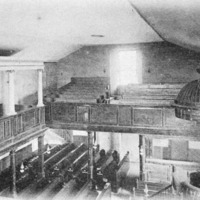 Aberdour Former Parish Church Interior (before 1926).
Shortly after the Great Disruption in 1843, a Free Church congregation was founded in Aberdour. They opened a church, called St Colme’s, in 1845,…
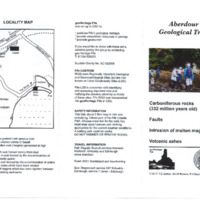 Aberdour Geological Trail
A walking trail to see the geology of Aberdour.
All Saints’ Church originally served the St Andrews fishing community (which was traditionally focused around the east end of town). In 1903 a small…
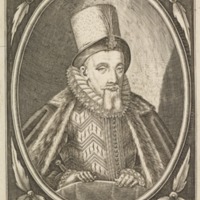 An anonymous engraving of King James VI and I. (Credit: National Galleries of Scotland)
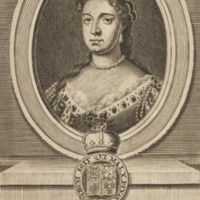 An anonymous engraving of Queen Mary II. With her husband William of Orange, Mary authorised the restoration of Presbyterianism in Scotland. (Credit: National Galleries of Scotland)
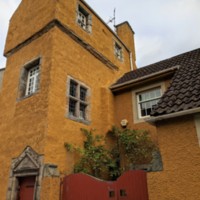 An early seventeenth-century house in Inverkeithing. In July 1651 there was a battle fought just to the south of Inverkeithing between English Parliamentarians and Scottish supporters of Charles II. (Credit: Open Virtual Worlds / University of St Andrews)
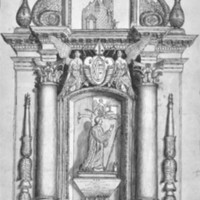 An eighteenth-century drawing of the monument to Archbishop Sharp in Holy Trinity Church, St Andrews. A relief near the base of the monument shows the archbishop's murder. (Credit: University of St Andrews)
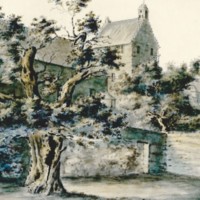 An eighteenth-century painting of St Mary's College in the University of St Andrews. John Douglas was for many years a member of St Mary's. (Credit: University of St Andrews)
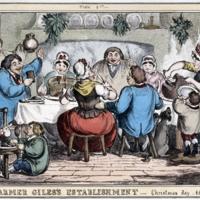 An English cartoon by William Heath making fun of Christmas festivities in the countryside in about 1800. (Credit: The Board of Trustees of the Science Museum, London)