Browse Items (658 total)
Archbishop James Sharp was a divisive religious leader. Many Presbyterians felt that he had sold out the Church of Scotland by agreeing to become…
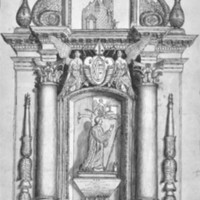 An eighteenth-century drawing of the monument to Archbishop Sharp in Holy Trinity Church, St Andrews. A relief near the base of the monument shows the archbishop's murder. (Credit: University of St Andrews)
In 1660 the English invited Charles II to return as king. Shortly afterwards Charles set about overturning the religious changes of the previous…
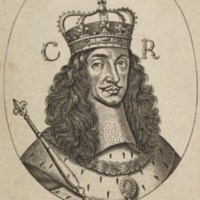 An engraving of King Charles II by William Fairthorne. (Credit: National Galleries of Scotland)
In 1639 Scotland slipped into religious war. Supporters of the National Covenant (sometimes known as Covenanters) took up arms in defence of their…
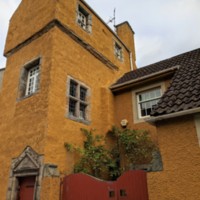 An early seventeenth-century house in Inverkeithing. In July 1651 there was a battle fought just to the south of Inverkeithing between English Parliamentarians and Scottish supporters of Charles II. (Credit: Open Virtual Worlds / University of St Andrews)
The 1630s saw growing tensions about religion in Scotland. At this time King Charles I tried to bring the Church of Scotland more in line with English…
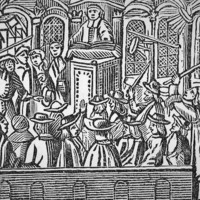 A woodcut showing protestors objecting to Archbishop Spottiswoode's efforts to introduce the Scottish Prayer Book. (Credit: Wikimedia)
As he grew older King James VI became opposed to the relatively democratic government of the Church of Scotland. He had bitter disputes with what he…
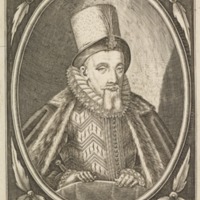 An anonymous engraving of King James VI and I. (Credit: National Galleries of Scotland)
Reading the Bible formed a vital part of Protestant religious activity. In particular Protestants believed that people should have access to the Bible…
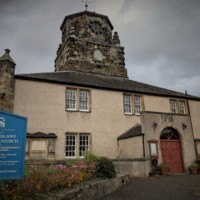 Burntisland Parish Church was one of the first churches built in Fife after the Reformation. It was designed for listeners to be able to focus on the preaching and formed a major departure from the traditional layout of churches. (Credit: Open Virtual Worlds / University of St Andrews)
The later decades of the sixteenth century saw ongoing tensions about how radical the Church of Scotland should be. Many of these arguments became…
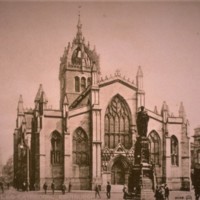 During the 1590s the Scottish Parliament usually met in St Giles' Kirk in Edinburgh. This photograph shows St Giles' in the 1870s. (Credit: University of St Andrews)
By the 1570s the Church of Scotland was adopting an increasingly hard line on religious festivals. In particular there was a campaign against…
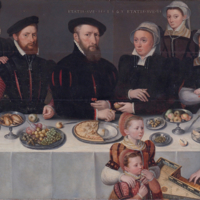 The family of a wine-merchant in Antwerp enjoy a celebratory meal in the 1560s. In Scotland feasting and taking time off from work at Christmas came to be a punishable offence in the years after the Reformation. (Credit: Rijksmuseum / Wikimedia)
For many years there were bitter debates about how the new Protestant Church of Scotland should be governed. In the 1560s each region had a…
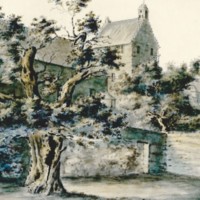 An eighteenth-century painting of St Mary's College in the University of St Andrews. John Douglas was for many years a member of St Mary's. (Credit: University of St Andrews)
The Reformation Parliament of 1560 saw Scotland officially declared a Protestant country. However, it took time to establish the structures of a…
 Holy Trinity Church in St Andrews. This image shows the church in the eighteenth century. The medieval stained glass has been removed and several windows partly blocked up to fit with Reformed ideas on church design. (Credit: University of St Andrews)
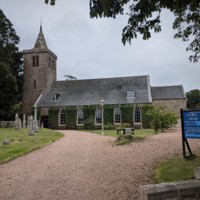 The Collegiate Church at Crail was reformed in June 1559, shortly before the Protestants descended on the religious capital of St Andrews. (Credit: Open Virtual Worlds / University of St Andrews)
In the spring and summer of 1559 Protestant activists set out to ‘reform’ Roman Catholic churches. Influenced by strict Calvinist ideas on the…
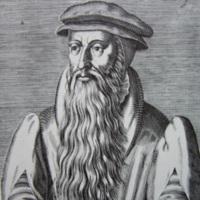 John Knox - one of best known Protestant preachers in Reformation Scotland. (Credit: Wikimedia)
During the 1550s a number of Roman Catholics worked to bring improvements to the Church in Scotland. Fife was at the heart of this movement, which was…
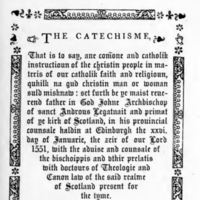 The title page of Archbishop Hamilton's 'Catechism'. This was the first book ever printed in Fife. (Credit: Internet Archive)
In the spring of 1546 the Roman Catholic archbishop of St Andrews, Cardinal David Beaton, was assassinated by a group of Fife lairds who opposed his…
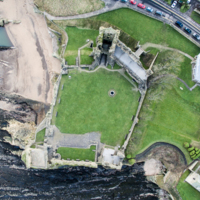 St Andrews Castle seen from the air. Before the Reformation the castle was the residence of the Archbishops of St Andrews. (Credit: Open Virtual Worlds / University of St Andrews)
In 1517 the German academic Martin Luther published a series of criticisms of the Roman Catholic Church. Luther’s protest rapidly developed into an…
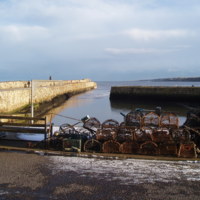 The old piers at St Andrews Harbour. In the 1520s this harbour was the focus for smuggling illicit religious publications into Scotland. (Credit: Bess Rhodes)
 Crail Kilwinning
In 1845 Hugh Ralph noted that one family in the parish belonged to the Roman Catholic Church, but it was not until 1971 that a RC congregation…
There is some debate as to when the Episcopal Church congregation was founded in Aberdour. In 1845 Hugh Ralph noted that there was one Episcopal…
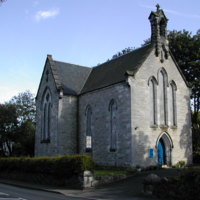 St Columba’s Episcopal Church, Aberdour
Shortly after the Great Disruption in 1843, a Free Church congregation was founded in Aberdour. They opened a church, called St Colme’s, in 1845,…
The location of the church so close to their country seat at Aberdour Castle had been a point of contention for the Douglas family for some time, and…
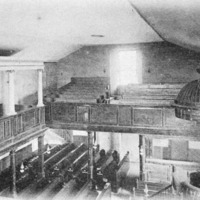 Aberdour Former Parish Church Interior (before 1926).
James Douglas, earl of Morton (d.1493) founded St Martha’s hospital in Aberdour in 1474. However, by 1486 this project had not been realised, and the…
James Douglas, 1st earl of Morton (d.1493) founded St Martha’s hospital in Aberdour in 1474. It was located close to a holy well dedicated to St…
The parish church of Aberdour first appears in the records in the twelfth century when it was the subject of a dispute between a local lord, William…
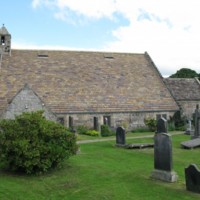 St Fillan's Church, Aberdour (Source: Richard Fawcett, 2012)
The placename Eglismartin (the ‘Church of (St) Martin’) in Easter Aberdour was first recorded in the fourteenth century. Names with the Eglis or…
During the 1720s the popular preacher John Glas (a graduate of the University of St Andrews and minister at Tealing near Dundee) put forward a series…
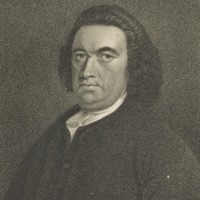 Portrait of John Glas, the founder of the Glasites. (Credit: National Galleries of Scotland)
Disagreements about the appointment of ministers and the role of powerful landowners as patrons led to a split in the Church of Scotland. A small…
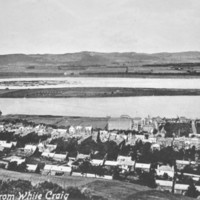 Newburgh was one of a number of Fife communities where people seceded from the Church of Scotland in the 1730s and 1740s. View across Newburgh and the River Tay in about 1894. (Credit: University of St Andrews)
 1745 – 1746 Jacobite Rising (The Forty-Five)
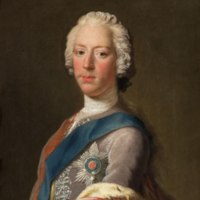
In August 1745 Charles Edward Stuart (sometimes called the Young Pretender) landed on the West Coast of Scotland. His arrival triggered a far-reaching…
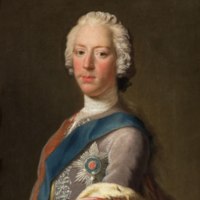 Prince Charles Edward Stuart, also known as the Young Pretender. Portrait by Allan Ramsey. (Credit: National Galleries of Scotland / Wikimedia)
 1746 Increased Restrictions on Episcopalians
Following the failed rebellion of 1745 and 1746 checks on Episcopalians increased. Episcopal ministers who failed to take an oath of loyalty were…
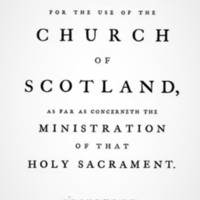
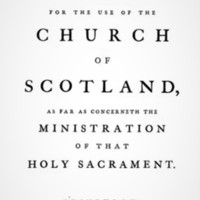 During the eighteenth century many Episcopal services were adapted from the Scottish Prayer Book of 1637. Revised selections from the Prayer Book were sometimes published. These were called 'wee bookies'. (Credit: John Dowden)
The new Secession Church had a number of internal divisions which came to a head in the late 1740s. A particular area of disagreement concerned…
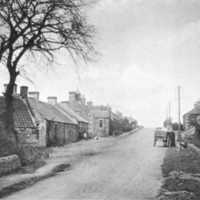 The village of Balmullo had an Anti-Burgher congregation in the 1740s. They may have met on the site of the building with a bell and a porch seen near the middle of this photograph from 1903. (Credit: University of St Andrews)
During the 1750s and 1760s a dispute over the appointment of a new minister at Inverkeithing led to another split in the Church of Scotland. A group…
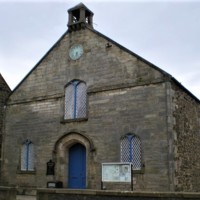 The modern parish church in Colinsburgh was built by a Relief Church congregation in the nineteenth century. It was probably on this site that the Relief Church first met in the 1760s. (Credit: Richard Law / Wikimedia)
Since the Reformation the Scottish government had banned Roman Catholic worship. In 1778 the British Parliament tried to reduce the restrictions on…
 Bishop George Hay was the Roman Catholic leader responsible for Lowland Scotland in the late eighteenth century. In 1779 Hay's house in Edinburgh was burned during anti-Catholic protests. (Credit: G.A. Periam / Wikimedia)
Following the death of Charles Edward Stuart, the leaders of the Scottish Episcopal Church agreed to support George III. After some argument, the…
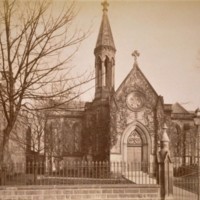 St Peter's Episcopal Church in Kirkcaldy in about 1880. An Episcopal church was built in Kirkcaldy in 1811 following the lifting of restrictions in the 1790s. The building shown here was built in 1844 and demolished in the 1970s. (Credit: University of St Andrews)
In the early 1790s the British Parliament decided to resolve the status of Roman Catholics in Scotland. More than a decade after the harshest…
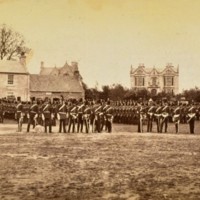 The Fife militia at Cupar in 1862. Until the 1790s Catholics were banned from serving in the county militias (which served on a part-time basis) or in the regular army. (Credit: University of St Andrews)
After more than seventy years of disagreement (largely focusing on the relationship between church and state) most members of the Burgher Church…
After more than seventy years of disagreement (largely focusing on the relationship between church and state) most members of the Burgher Church…
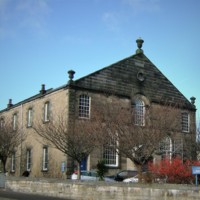 Linktown Church in Kirkcaldy stands on the site of an eighteenth-century Burgher Church. For many years Kirkcaldy was a focal point for religious dissent. (Credit: Kilnburn / Wikimedia)
In 1829 the British Parliament passed legislation lifting most restrictions on Roman Catholics. Among other new freedoms, Roman Catholics were now…
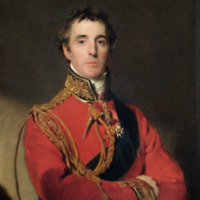 The Duke of Wellington backed Catholic emancipation in 1829. As prime minister he helped steer the legislation through parliament and put pressure on George IV to agree to the reforms. (Credit: English Heritage / Wikimedia)
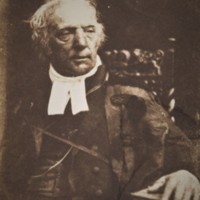 Thomas Chalmers was the first moderator of the Free Church. This portrait was by the pioneering photographers David Octavius Hill and Robert Adamson who set out to record the likenesses of the ministers at the Disruption Assembly. (Credit: University of St Andrews)
For more than a century there had been divisions in the Church of Scotland over how appointments were made and the relationship between church and…
 Thomas Chalmers was a leading evangelical minister and academic. Following the Great Disruption he became the first moderator of the Free Church. This portrait was by the pioneering photographers David Octavius Hill and Robert Adamson who set out to record the likenesses of the ministers at the Disruption Assembly. (Credit: University of St Andrews)
While the Church of Scotland was splitting again, some groups of seceders were joining together. In 1847 the United Secession Church and the Relief…
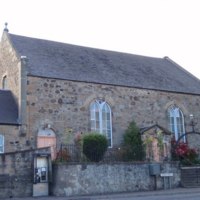 St John's Church in Inverkeithing has its origins in an eighteenth-century burgher congregation. In 1847 the congregation of St John's joined the United Presbyterians. The congregation later became Church of Scotland. The building now serves as the parish church for Inverkeithing. (Credit: Graeme Smith / Wikimedia)
For some decades there had been debates about the fact that clergy ordained by Scottish Episcopal bishops could not legally be appointed to positions…
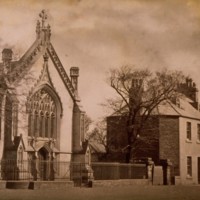 St Andrew's Episcopal Chapel on North Street in St Andrews in about 1865. Not long after this photograph was taken the episcopal congregation moved to a larger church on Queen's Terrace which is still in use today. (Credit: University of St Andrews)
Since the early 1700s the role of lay patrons in church appointments had been a major cause of discontent in the Church of Scotland, and had triggered…
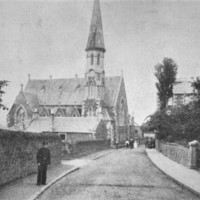 The United Free Church in Newport in about 1903. This church was one of several founded in the nineteenth century by congregations who broke away from their traditional parish churches over the question of lay patronage. (Credit: University of St Andrews)
 Income
As discrimination against Roman Catholics reduced, the Papacy decided to re-establish a traditional church hierarchy in Scotland. Six Roman Catholic…
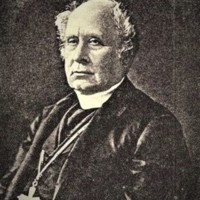 Bishop John Strain - the first Archbishop of St Andrews and Edinburgh after the Roman Catholic hierarchy was reintroduced to Scotland. (Credit: Wikimedia)
For several centuries the University of St Andrews had not celebrated Christmas. However, in 1887 the university decided to have a communal Christmas…
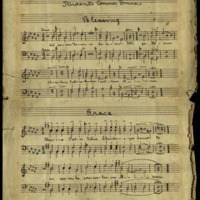 The Christmas dinner at St Mary's was part of a wider effort to revive ceremonies associated with dining at the University of St Andrews. Sung graces and blessings were also reintroduced - as seen in this setting composed for the university by Sir Alastair Campbell Mackenzie in 1894. (Credit: University of St Andrews)
The eighteenth and nineteenth centuries had seen several groups leave the Church of Scotland. In 1900 two of the largest of these break-away…
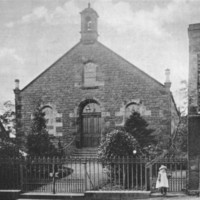 The United Free Church in Leuchars in 1903. This church was built in the 1890s for a Free Church congregation. (Credit: University of St Andrews)
Thousands of Fife residents served in the armed forces during the First World War. Many were killed. After the war communities across Fife put up…
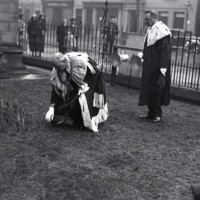 Local dignitaries place crosses in the ground outside Holy Trinity Church in St Andrews on Armistice Day in 1936. (Credit: University of St Andrews)
After centuries of the controversy about the relationship between church and state, the British Parliament passed the Church of Scotland Act. This…
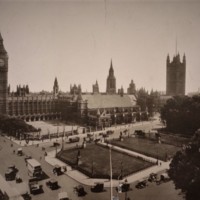 The Houses of Parliament at Westminster in 1919. (Credit: University of St Andrews)
At a joint assembly in Edinburgh the United Free Church agreed to merge with the Church of Scotland. This meant that many places in Fife now had…
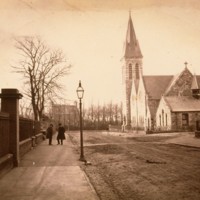 Hope Park Church in St Andrews in about 1860. Hope Park was one of many United Free Church congregations to join the Church of Scotland in 1929. (Credit: University of St Andrews)
During the Second World War the armed forces expanded and many people moved around the country. New places of worship were established in Fife for…
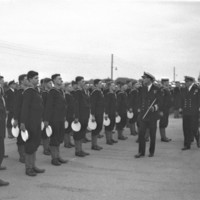 A naval inspection at Crail Aerodrome in about 1940. Early in the Second World War a chapel was built at Crail Airfield for the service personnel. (Credit: George Cowie / University of St Andrews)
During the nineteenth and twentieth centuries Presbyterian opposition to Christmas reduced. In 1958 Christmas became a public holiday in Scotland.…
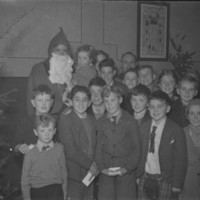 Christmas party in St Andrews in 1947. Father Christmas is dressed in the traditional red gown worn by St Andrews undergraduates. (Credit: George Cowie / University of St Andrews)
The Second Vatican Council (held in the Vatican in Rome) sought to modernise Roman Catholicism. It agreed major changes to Roman Catholic worship. One…
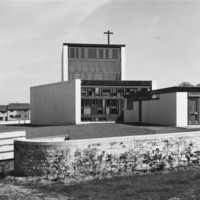 St Paul's Roman Catholic Church in Glenrothes in 1962. St Paul's was one of several new Roman Catholic churches built in Fife during the mid-twentieth century. (Credit: University of St Andrews)
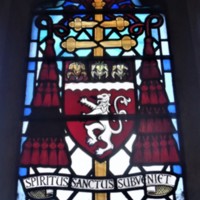 Cardinal Gray's coat of arms on a window in St Mary's Cathedral in Edinburgh. (Credit: Sheila1988 / Wikimedia)
 Townhill village on the edge of Dunfermline. (Credit: The Majestic Fool / Wikimedia)