Browse Items (658 total)
In 1899 the bishop of St Andrews, Dunblane and Dunkeld was successfully petitioned for the foundation of an episcopal mission church in Inverkeithing…
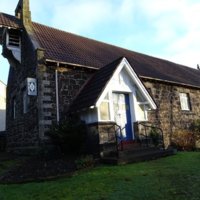 St Peter’s Episcopal Church (Creative Commons) © Copyright 2021, SCHR Ltd. All rights reserved. Please contact us for permission to use this image.
St John’s was founded in 1752 following a split within the congregation of St Peter’s parish church over the choice of a minister by right of…
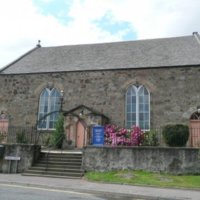 The Church of St John (Source: Amanda Gow, 2007) © Copyright 2021, SCHR Ltd. All rights reserved. Please contact us for permission to use this image.
A Franciscan Friary was founded in Inverkeithing in the fourteenth century. The Greyfriars, as they were known from the colour of their cowls, were a…
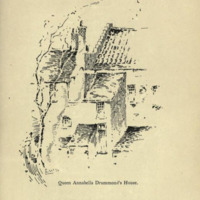 Sketch of ‘Annabella Drummond’s House’, 1894 (Source: John Geddie, The Fringes of Fife (Edinburgh, 1894), p. 41)
The parish church of St Peter is first documented in the twelfth century and by the later middle ages it was a large and impressive building…
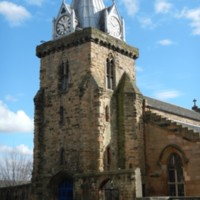 Parish Church of St Peter, West Tower (Source: Tom Turpie)
The chapel of Inverkeithing is first mentioned in the 1150s when it belonged to Abbey of Dunfermline. While it has been suggested that this chapel…
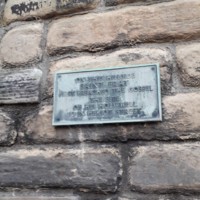 St_Erat_Plaque__3_.jpg
Local tradition records that Christianity was brought to Inverkeithing in around 500AD by a holy man called St Erat. An ancient well known as Heriot’s…
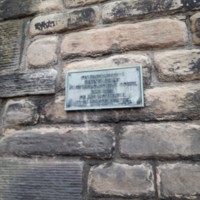 Plaque outside the Parish Church of Inverkeithing (Source: Tom Turpie)
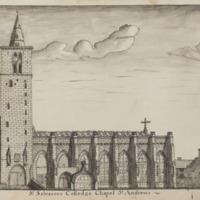 St Salvator’s Chapel in about 1767. Some of the original windows have been partly blocked up, others are covered with shutters. The medieval stone roof can still be seen. (Source: University of St Andrews Library, OLI-11. Available at: https://collections.st-andrews.ac.uk/item/st-salvators-college-chapel/93059)
St Leonard’s Chapel has a long and varied history. The Culdees may have had a pilgrim hospital on this site in the Early Middle Ages. In the 1140s the…
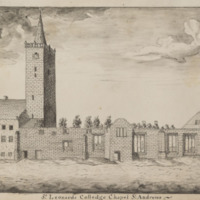 St Leonard’s Chapel after 1761. The chapel was then in ruins and being used to grow shrubs, although the (now demolished) college tower was still standing. (Source: University of St Andrews Library, OLI-15. Available at: https://collections.st-andrews.ac.uk/item/st-leonards-chapel/93063)
Following the Reformation the authorities in St Andrews (like many other Scottish towns) prosecuted Roman Catholics. This meant that for several…
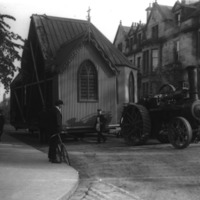 The original iron Church of St James being removed in 1909. (Source: University of St Andrews Library, GMC-F-95. Available at: https://collections.st-andrews.ac.uk/item/st-jamess-church-st-andrews/8269)
During the late Middle Ages a chapel dedicated to St Anna (the grandmother of Jesus) stood on the north side of North Street. St Anna’s Chapel was…
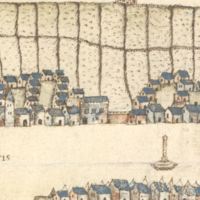 North Street around the site of St Anna’s Chapel, c. 1580. The larger building with three windows towards the centre of the image may represent the former chapel. (Source: John Geddy, ‘S. Andrew sive Andreapolis Scotiae Universitas Metropolitana’. NLS, MS.20996. Available at: http://maps.nls.uk/towns/rec/215)
St Andrew’s Church was built to replace a smaller Episcopal church (also dedicated to St Andrew) which once stood on North Street. The foundations for…
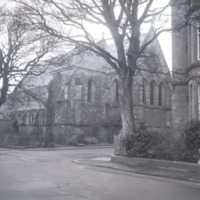 St Andrew’s Episcopal Church in about 1955. Photograph by George Cowie. (Source: University of St Andrews Library, GMC-29-20-4. Available at: https://collections.st-andrews.ac.uk/item/st-andrews-episcopal-church-queens-terrace-st-andrews/585969)
In 1690 Scotland officially became a Presbyterian country, rejecting episcopacy (or the government of the church by bishops). Some Scots did not…
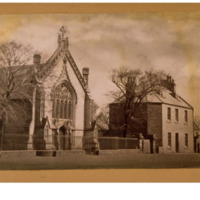 St Andrew’s Chapel in about 1865. (Source: University of St Andrews Library, ALB-10-62. Available at: https://collections.st-andrews.ac.uk/item/st-andrews-chapel-st-andrews/43875 )
The Salvation Army started a corps in St Andrews in 1893. After some difficulties in the early years, there was a continuous Salvation Army presence…
The first version of Martyrs’ Church was built in the 1840s by a Free Church congregation (one of the groups that broke away from the Church of…
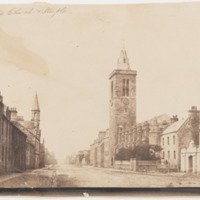 North Street in about 1846. The bell turret of Martyrs’ Kirk can be seen on the left-hand side of the street, opposite St Salvator’s Chapel. (Source: University of St Andrews Library, EPM-JA-10. Available at: https://collections.st-andrews.ac.uk/item/north-street-st-andrews/100475)
Hope Park was built in the 1860s for the United Presbyterians, who had previously been worshipping in a house on North Street. The church was designed…
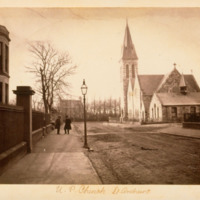 Hope Park Church in about 1860. (Source: University of St Andrews Library, ALB-49-33. Available at: https://collections.st-andrews.ac.uk/item/u-p-united-presbyterian-church-st-andrews/80687)
Since the early fifteenth century Holy Trinity Church has been located on South Street. The current site was given by Sir William Lindsay of the Byres…
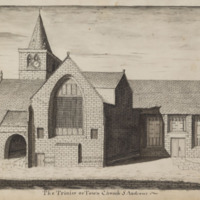 Holy Trinity Church in 1767. Drawing by John Oliphant. (Source: University of St Andrews Library, OLI-16. Available at: https://collections.st-andrews.ac.uk/item/trinity-church-st-andrews/93065)
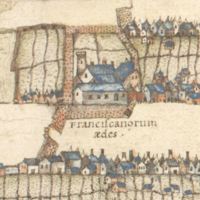 The Franciscan friary in St Andrews shortly after the Reformation. (Source: John Geddy, ‘S. Andrew sive Andreapolis Scotiae Universitas Metropolitana’. NLS, MS.20996. Available at: http://maps.nls.uk/towns/rec/215)
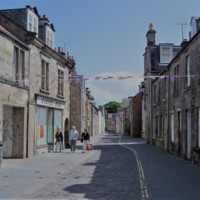 Gospel Hall, Market Street, St Andrews. (Source: Bess Rhodes)
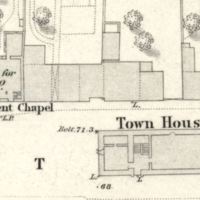 The Congregational chapel on Market Street in the 1850s. (Source: 1854 Ordnance Survey Map of St Andrews. Available at: https://maps.nls.uk/view/74416778)
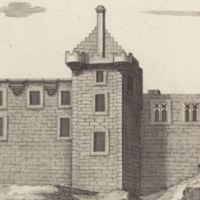 St Andrews Castle at the end of the seventeenth century. The windows of the castle chapel (with their quatrefoil tracery) can be seen to the right of the fore tower. (Source: John Slezer, ‘The Ruins of the Castle of St Andrews’, Theatrum Scotiae (1693). Available at: http://digital.nls.uk/slezer/engraving.cfm?sl=15)
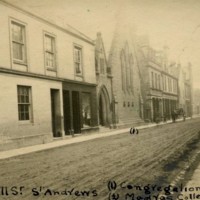 The Congregational Church on Bell Street in 1895. (Source: University of St Andrews Library, StA-BellS-1. Available at: https://collections.st-andrews.ac.uk/item/bell-street-st-andrews-from-n/123317)
The area now called Hallow Hill was once known as Eglesnamin. This name also has religious associations, with 'egles' appearing to be a Pictish word…
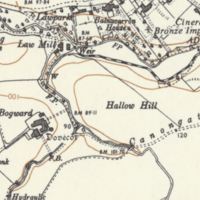 The Hallow Hill area in 1968 before large-scale housing development. The hill is bounded on the north by the Kinness Burn, to the west by the Cairnsmill Burn, and to the south by the medieval Canongate. (Source: Ordnance Survey, Sheet NO 41 NE. Available from the National Library of Scotland: https://maps.nls.uk/view/188141295)
The parish of Holy Trinity is first recorded in the 1140s, when Bishop Robert was reorganising religious life in St Andrews. For centuries Holy…
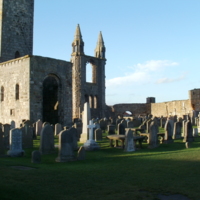 The original parish church of Holy Trinity was probably a little to the north of St Rule’s, in the area towards the centre and right side of this photograph. (Source: Bess Rhodes)
The original parish church of Holy Trinity was probably a little to the north of St Rule’s, in the area towards the centre and right side of this…
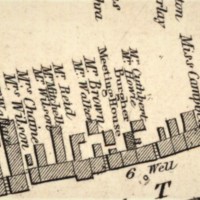 The Burgher Kirk shown in 1820 on John Wood’s plan of St Andrews. (Source: National Library of Scotland, EMS. X.009)
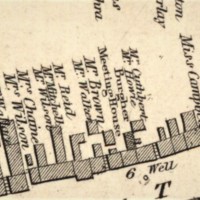 The Burgher Kirk shown in 1820 on John Wood’s plan of St Andrews. (Source: National Library of Scotland, EMS. X.009. Available at: https://maps.nls.uk/view/74400057)
During the late Middle Ages an Observant Franciscan friary was located on a large plot of land between Market Street and North Street (where…
The Gospel Hall is in a former shop on the narrow section of Market Street. Christian Brethren (traditionally sometimes called Plymouth Brethren) have…
Since 1993 Quaker meetings have been held in a Victorian house on Howard Place. The Society of Friends occupy the lower two storeys of the house, with…
In the 1930s the Christian Brethren leased a cottage on Greenside Place. This was subsequently converted into a hall for worship. The Christian…
A Congregational church was built on the north side of Market Street in 1807. The church had seating for 320 people. There were two entrances from the…
During the mid-nineteenth century a Congregational church was built on the east side of Bell Street. It was substantial Victorian stone building…
St Andrews Castle was once the home of the bishops of St Andrews. There seems to have been a castle on this site since at least the 1190s. We do not…
In 1774 the Burgher congregation in St Andrews moved to a building in a yard on the north side of South Street. This property still exists and is now…
During the 1730s a section of the Church of Scotland was unhappy with how ministers were appointed and the allocation of religious wealth. They formed…
The Dominican order (or black friars) arrived in St Andrews during the fifteenth century. There are references to a Dominican place or house in St…
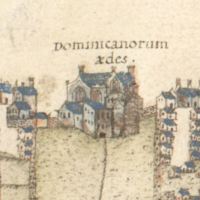 St Andrews’ Dominican friary shortly after the Reformation. (Source: John Geddy, ‘S. Andrew sive Andreapolis Scotiae Universitas Metropolitana’. NLS, MS.20996. Available at: http://maps.nls.uk/towns/rec/215)
There has been a Baptist church on South Street since the early 1840s. When the original church opened it had seating for 250 people. The main space…
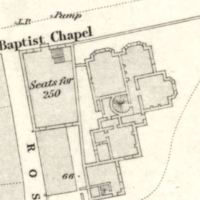 The original Baptist chapel on a mid-nineteenth-century map. (Source: 1854 Ordnance Survey Map of St Andrews. Available at: https://maps.nls.uk/view/74416778)
 Walter Bower describes life at St Andrews Cathedral Priory in the late Middle Ages. (Read by Professor Michael Brown.)
St Andrews Cathedral was once the most important church in Scotland. It was the base for the country’s senior bishopric and housed the relics of…
 A video showing how St Andrews Cathedral may have appeared in 1318. (Source: Open Virtual Worlds / Smart History)
 Point of Interest Key
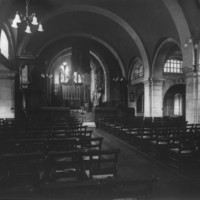 Interior of All Saints’ Church in about 1920. (Source: University of St Andrews Library, GMC-F-94.)
All Saints’ Church originally served the St Andrews fishing community (which was traditionally focused around the east end of town). In 1903 a small…
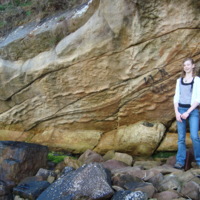 Arthropleura Tracks, St Andrews
Arthropleura tracks near St Andrews, a cast of them can be seen in MUSA, the Scores, St Andrews
 Channel, Roome Bay
Channel cut into Carboniferous sandstones at Roome Bay, Crail
The Tolbooth built in 1598 and tower, rebuilt in 1776 contain well cut blocks of both local sandstone (buff-coloured) and material from Locharbriggs…
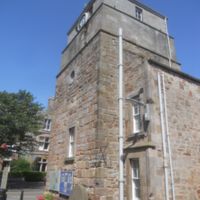 Tollbooth tower, Crail
Tollbooth Tower, Crail
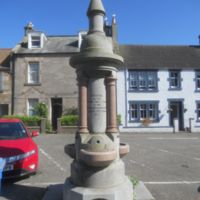 Memorial Fountain, Crail
The Memorial Fountain was built in 1897 and is dedicated to Queen Victoria’s Diamond Jubilee. It is built of both grey and red granite.
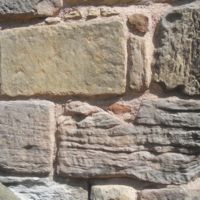 Tollbooth, Crail
The Tolbooth built in 1598 and tower, rebuilt in 1776 contain well cut blocks of both local sandstone (buff-coloured) and material from Locharbriggs…
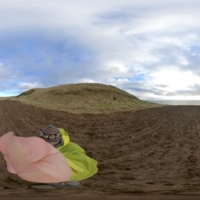 Photosphere of Kingcraig
Raised beach platforms at Kingcraig, nr. Elie, Fife
 Admiralty North East
 Cellardyke Rose
This bay doesn’t actually have rubies, it’s named after the tiny red garnets in the sand which look a bit like rubies to the untrained eye. You might…
This area between Kinghorn and Kirkcaldy has some pillow basalts as well as fossilised corals and crinoids.
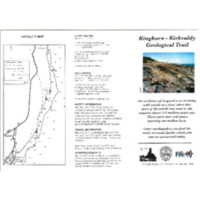 Kinghorn to Kirkcaldy Geological Trail
A walking trail to see the Geology between Kinghorn and Kirkcaldy.
St Monans has a number of fossils including corals and also a coal seam. The rocks here have been folded and tilted since they were deposited.
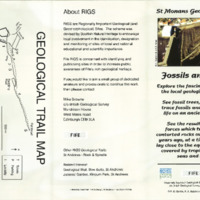 St Monans Geological Trail
A walking trail to see the Geology of St Monans.
At Wormit there is a wide variety of geology including lava flows, river conglomerates, intrusive rhyolite and glacial erratics.
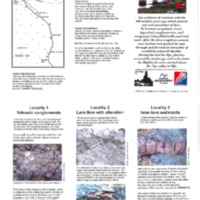 Wormit Geological Trail
A walking trail to see the geology of Wormit.
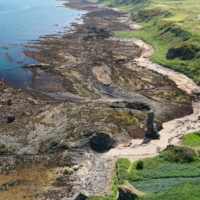 Rock and Spindle overvivew
Overview of Kinkell Ness with Rock and Spindle
 Cellardyke Rose model
Deformation structure within the Carboniferous sandstones at Cellardyke, Fife
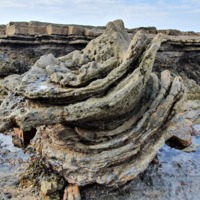 Cellardyke Rose
Deformation feature in Carboniferous sandstones near Cellardyke, Fife
Bed of fossil tree (Lepidodendron) stumps in Carboniferous sequence near Cellardyke, Fife
Carboniferous volcanic vent, Kinkell Ness has at its centre the Rock and Spindle
Holy Trinity Church features many interesting types of stone, including a beautiful alabaster and marble pulpit.
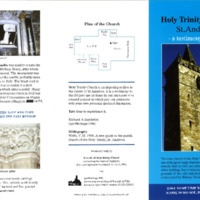 Holy Trinity Church St Andrews - A Testimony in Stone
A guide to the different types of stone used to build Holy Trinity Church.
At Aberdour the country rock (carboniferous sandstone) has been intruded by younger magma. There are also good examples of faulting and cross bedding.
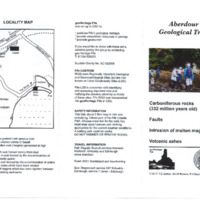 Aberdour Geological Trail
A walking trail to see the geology of Aberdour.
The rock at Crail is largely Carboniferous Sandstone and Shale, but a variety of types of rock have been used to build the village.
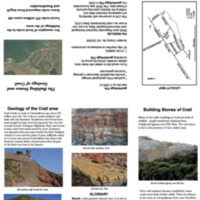 Building Stones of Crail
A walking guide to the stones that St Andrews is built with.
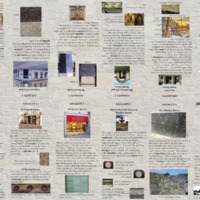 Building Stones of St Andrews
A guide to the stones used to build St Andrews.
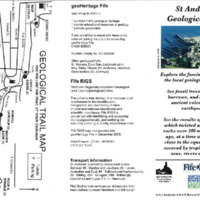 St Andrews Geological Trail
Geological field guide to St Andrews.
The Rock and Spindle is an ancient volcanic vent, and it has an excellent example of radial columnar jointing (it looks like spokes of a wheel) due to…
Kingsbarns has a variety of different fossils including 330 million year old millipede tracks. There are also fossilised shells and the imprints of…
 Kingsbarns Geological Trail
Geological field guide to Kingsbarns Beach.
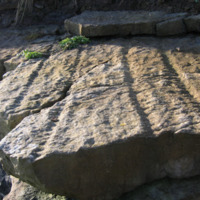 Arthropleura Tracks
Kincaple East raised beaches