Browse Items (658 total)
A congregation belonging to the Relief Church was founded in Dysart sometime in the 1760s. In 1772 they opened their own church, which later became…
The Anti-Burgher Congregation in Dysart was formed in 1747. In the early years they met in an old barn before constructing their own church in 1763 at…
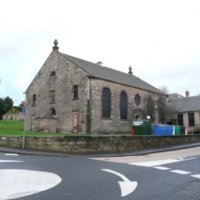 Dysart Barony Church (Source: Richard Fawcett, 2012)
In 1802-03 a new parish church was constructed in Dysart and the congregation moved from St Serf’s in an event known locally as the year of the big…
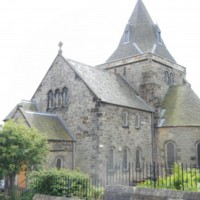 Dysart St Clair Parish Church (Source: Richard Fawcett, 2012)
Following the Great Disruption in 1843, the minister of Dysart, John Thomson, and a large part of the congregation joined the Free Church. Their first…
In May 1930 Dysart House, first built in 1756, was sold to Mrs Elsa af Wetterstedt Mitchell, and a month later she gifted it to the trustees for the…
 c.300 – 400 Arrival of Christianity in Scotland
Christianity was introduced to Southern Scotland during the Roman occupation of Britain. It is possible that some Christian communities survived the…
The earliest evidence for Christianity in Fife comes from Christian symbols on carved stones and in caves. Early examples include the carvings on the…
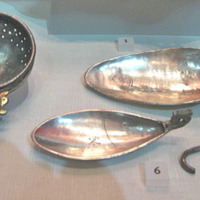 Two spoons with Christian symbols from a hoard found at Traprain Law, probably dating from about 410 AD. (Credit: Tyssil / Wikimedia)
Silver from the Traprain Law Treasure, East Lothian, Scotland. Bowls of river spoons.
The seventh and eighth centuries saw increasing conversion of the Picts (who then inhabited Fife and much of Scotland north of the Forth).…
St Andrews was an important religious centre from an early date. There seems to have already been a monastery here in 747 when the death of the abbot…
In the late 1960s the General Assembly of the Church of Scotland agreed that women could be ordained as ministers on the same terms as men. The first…
Since the sixteenth century there had been no cardinals resident in Scotland. However, in 1969 Gordon Gray, the Roman Catholic Archbishop of St…
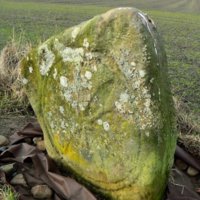 Early Christian carvings on the Skeith Stone. (Credit: James Allan / Wikimedia)
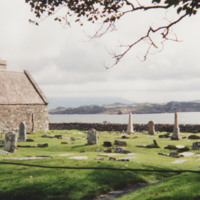 St Oran's Chapel on the island of Iona. (Credit: Libasstref / Wikimedia)
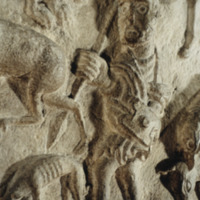 Reject - Detail St And Sarc
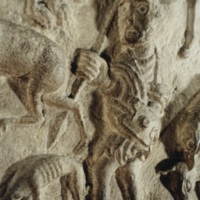 Detail of a hunting scene on the St Andrews Sarcophagus. (Credit: University of St Andrews)
In the ninth and tenth centuries a new monastic movement known as the Céli Dé arrived from Ireland. Céli Dé means servants of God and is sometimes…
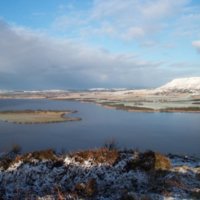 St Serf's Inch on Loch Leven. This island was home to an early Culdee community. (Credit: Mike Pennington / Wikimedia)
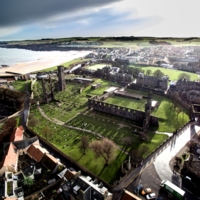 The medieval religious precinct at St Andrews viewed from the air. (Credit: Open Virtual Worlds / University of St Andrews)
By the tenth century St Andrews had become one of the most important churches in the kingdom of the Scots. In 965 the brother of the King of Tara died…
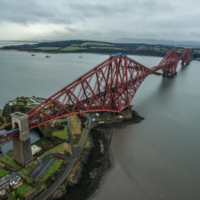 The Forth Bridge seen from the air near North Queensferry. The Victorian railway bridge crosses the Forth close to the route of Queen Margaret’s historic ferry. (Credit: Open Virtual Worlds / University of St Andrews)
Around 1070 King Malcolm III’s wife Margaret (later known as St Margaret of Scotland) brought a group of Benedictine monks to Dunfermline. The…
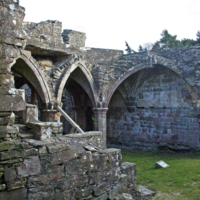 The ruins of the chapter house at the former Cistercian monastery at Balmerino. (Credit: Ed Marin / Wikimedia)
The late eleventh and early twelfth centuries saw a wish for monks to follow stricter rules. A number of new religious orders such as the Cluniacs and…
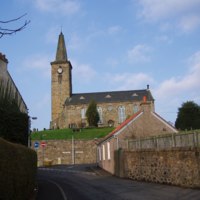 The parish church at Markinch. The church tower is thought to have been built during the reign of David I. (Credit: Mcwesty / Wikimedia)
King David I (one of the sons of Margaret and Malcolm III) supported major changes in the Scottish Church. He increased the number of bishops and gave…
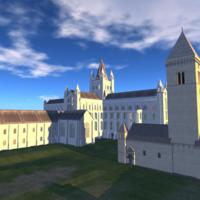 Reconstruction of St Andrews Cathedral in 1318. The older church of St Rule can be seen on the right. (Credit: Open Virtual Worlds / University of St Andrews)
In the 1160s work began on a grand new cathedral at St Andrews (to replace the smaller church now known as St Rule’s which was then in use). The new…
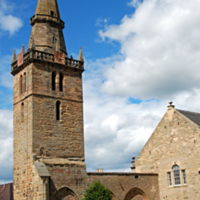 The tower of the old parish church of St Michael at Cupar. St Michael’s was one of the many churches rebuilt in Fife during the late Middle Ages, partly to make space for more chapels and side altars for masses for the dead. (Credit: Jim Bain / Wikimedia)
In 1215 the Fourth Lateran Council officially declared the Roman Catholic Church’s belief in the doctrine of purgatory. This was the idea that most…
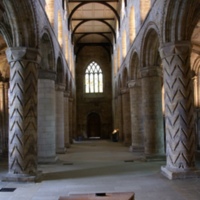 The medieval nave of Dunfermline Abbey. Dunfermline was the main burial place for the Scottish royal family from the time of Margaret's death until the early fourteenth century. (Credit: Otter / Wikimedia)
Queen Margaret (the wife of Malcolm III) seems to have been regarded as a saint by the residents of Fife soon after her death in 1093. Miracles were…
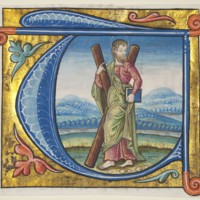 A late medieval image of St Andrew with his traditional X-shaped cross. (Credit: University of St Andrews)
The origins of the close connection between St Andrew and the people of Scotland go back into the early Middle Ages. However, during the wars between…
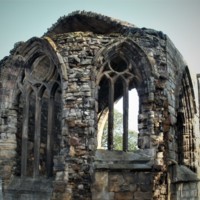 Remains of the late medieval church of the Dominican friars in St Andrews. (Credit: Bess Rhodes)
During the thirteenth century some people felt that monasteries had become too wealthy. In response new religious orders of friars were created. The…
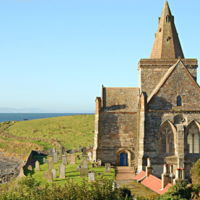 The medieval church at St Monans built by David II. (Credit: Jim Bain / Wikimedia)
In the 1360s King David II spent a large amount of money rebuilding the church at St Monans. The king did this because in 1346 he had survived being…
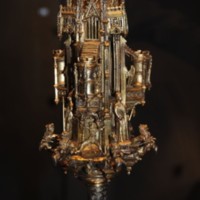 The ceremonial mace of St Salvator's College (one of the three colleges at the medieval University of St Andrews). The mace was commissioned by Bishop James Kennedy in 1461. (Credit: Sam Taylor / University of St Andrews)
During the late Middle Ages universities increasingly took over responsiblity for higher education. In 1410 a group of churchmen established a…
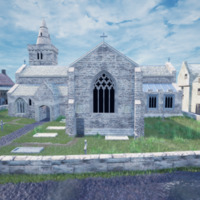 Reconstruction showing the possible appearance of the parish church of Holy Trinity in St Andrews, c.1559. (Credit: Open Virtual Worlds / University of St Andrews)
The fifteenth and early sixteenth centuries saw major building projects at many Fife churches. New churches were built and old ones remodelled. The…
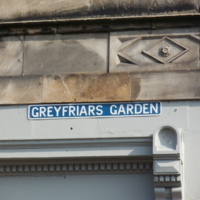 The street called Greyfriars Garden now covers where the Observant Franciscan friary once stood in St Andrews. (Credit: Bess Rhodes)
Like many religious orders, the Franciscans (or grey friars) grew slightly less strict over time. This concerned some people, and led to the…
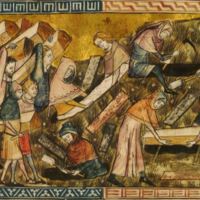 A fourteenth-century illustration of plague burials in Tournai. Similarly rushed burials probably took place in Fife. (Credit: Pierart dou Tielt / Wikimedia)
In 1349 the Black Death (probably a severe epidemic of bubonic plague) reached Fife. Churchmen were particularly likely to catch the disease as they…
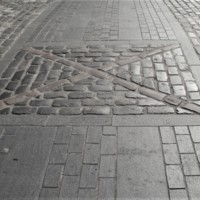 Pavel Kravar was burned at the stake beside the market cross in St Andrews. A saltire in the cobbles on Market Street shows where the cross once stood. (Credit: Bess Rhodes)
In the early 1430s a doctor named Pavel Kravar (sometimes known as Paul Craw in Scotland) was burned for heresy in the centre of St Andrews. Kravar…
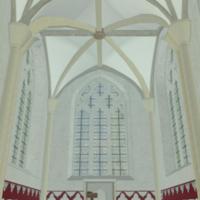 Reconstruction of the chapter house at St Andrews Cathedral in the late Middle Ages. (Credit: Open Virtual Worlds / University of St Andrews)
The bishops of St Andrews had for centuries claimed to be the most important churchmen in Scotland. In 1472 their special status was officially…
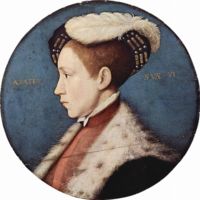 The young King Edward VI of England. Portrait perhaps by William Scrots. (Credit: The Met / Wikimedia)
The 1540s saw fighting between Scotland and England. The conflict was partly driven by the English government’s wish to arrange a marriage between…
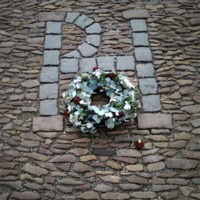 A wreath and the letters PH marking the site of Patrick Hamilton's execution on North Street in St Andrews. (Credit: Bess Rhodes)
Between the 1520s and the 1550s the Roman Catholic authorities in Fife severely punished a number of Protestant sympathisers. No less than four…
 Townhill village on the edge of Dunfermline. (Credit: The Majestic Fool / Wikimedia)
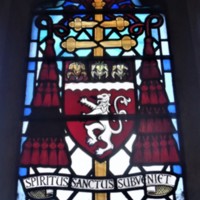 Cardinal Gray's coat of arms on a window in St Mary's Cathedral in Edinburgh. (Credit: Sheila1988 / Wikimedia)
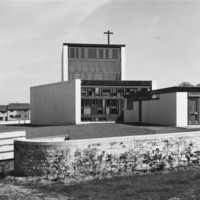 St Paul's Roman Catholic Church in Glenrothes in 1962. St Paul's was one of several new Roman Catholic churches built in Fife during the mid-twentieth century. (Credit: University of St Andrews)
The Second Vatican Council (held in the Vatican in Rome) sought to modernise Roman Catholicism. It agreed major changes to Roman Catholic worship. One…
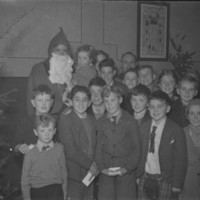 Christmas party in St Andrews in 1947. Father Christmas is dressed in the traditional red gown worn by St Andrews undergraduates. (Credit: George Cowie / University of St Andrews)
During the nineteenth and twentieth centuries Presbyterian opposition to Christmas reduced. In 1958 Christmas became a public holiday in Scotland.…
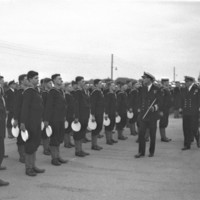 A naval inspection at Crail Aerodrome in about 1940. Early in the Second World War a chapel was built at Crail Airfield for the service personnel. (Credit: George Cowie / University of St Andrews)
During the Second World War the armed forces expanded and many people moved around the country. New places of worship were established in Fife for…
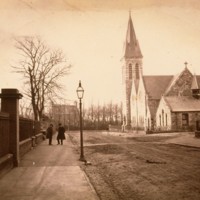 Hope Park Church in St Andrews in about 1860. Hope Park was one of many United Free Church congregations to join the Church of Scotland in 1929. (Credit: University of St Andrews)
At a joint assembly in Edinburgh the United Free Church agreed to merge with the Church of Scotland. This meant that many places in Fife now had…
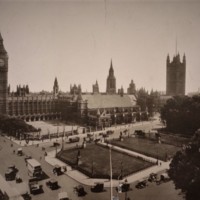 The Houses of Parliament at Westminster in 1919. (Credit: University of St Andrews)
After centuries of the controversy about the relationship between church and state, the British Parliament passed the Church of Scotland Act. This…
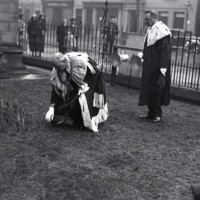 Local dignitaries place crosses in the ground outside Holy Trinity Church in St Andrews on Armistice Day in 1936. (Credit: University of St Andrews)
Thousands of Fife residents served in the armed forces during the First World War. Many were killed. After the war communities across Fife put up…
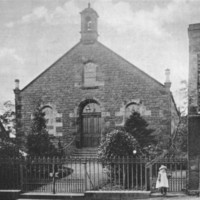 The United Free Church in Leuchars in 1903. This church was built in the 1890s for a Free Church congregation. (Credit: University of St Andrews)
The eighteenth and nineteenth centuries had seen several groups leave the Church of Scotland. In 1900 two of the largest of these break-away…
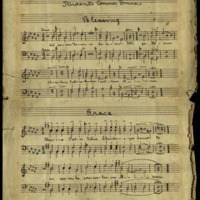 The Christmas dinner at St Mary's was part of a wider effort to revive ceremonies associated with dining at the University of St Andrews. Sung graces and blessings were also reintroduced - as seen in this setting composed for the university by Sir Alastair Campbell Mackenzie in 1894. (Credit: University of St Andrews)
For several centuries the University of St Andrews had not celebrated Christmas. However, in 1887 the university decided to have a communal Christmas…
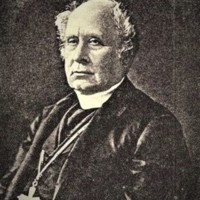 Bishop John Strain - the first Archbishop of St Andrews and Edinburgh after the Roman Catholic hierarchy was reintroduced to Scotland. (Credit: Wikimedia)
As discrimination against Roman Catholics reduced, the Papacy decided to re-establish a traditional church hierarchy in Scotland. Six Roman Catholic…
 Access
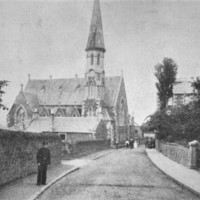 The United Free Church in Newport in about 1903. This church was one of several founded in the nineteenth century by congregations who broke away from their traditional parish churches over the question of lay patronage. (Credit: University of St Andrews)
Since the early 1700s the role of lay patrons in church appointments had been a major cause of discontent in the Church of Scotland, and had triggered…
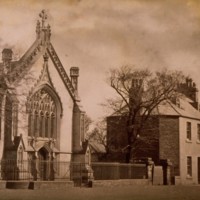 St Andrew's Episcopal Chapel on North Street in St Andrews in about 1865. Not long after this photograph was taken the episcopal congregation moved to a larger church on Queen's Terrace which is still in use today. (Credit: University of St Andrews)
For some decades there had been debates about the fact that clergy ordained by Scottish Episcopal bishops could not legally be appointed to positions…
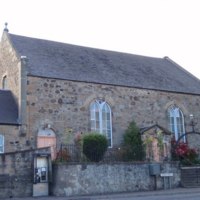 St John's Church in Inverkeithing has its origins in an eighteenth-century burgher congregation. In 1847 the congregation of St John's joined the United Presbyterians. The congregation later became Church of Scotland. The building now serves as the parish church for Inverkeithing. (Credit: Graeme Smith / Wikimedia)
While the Church of Scotland was splitting again, some groups of seceders were joining together. In 1847 the United Secession Church and the Relief…
 Thomas Chalmers was a leading evangelical minister and academic. Following the Great Disruption he became the first moderator of the Free Church. This portrait was by the pioneering photographers David Octavius Hill and Robert Adamson who set out to record the likenesses of the ministers at the Disruption Assembly. (Credit: University of St Andrews)
For more than a century there had been divisions in the Church of Scotland over how appointments were made and the relationship between church and…
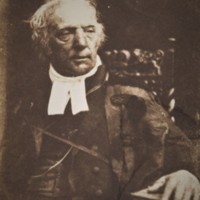 Thomas Chalmers was the first moderator of the Free Church. This portrait was by the pioneering photographers David Octavius Hill and Robert Adamson who set out to record the likenesses of the ministers at the Disruption Assembly. (Credit: University of St Andrews)
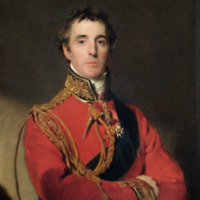 The Duke of Wellington backed Catholic emancipation in 1829. As prime minister he helped steer the legislation through parliament and put pressure on George IV to agree to the reforms. (Credit: English Heritage / Wikimedia)
In 1829 the British Parliament passed legislation lifting most restrictions on Roman Catholics. Among other new freedoms, Roman Catholics were now…
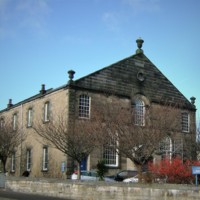 Linktown Church in Kirkcaldy stands on the site of an eighteenth-century Burgher Church. For many years Kirkcaldy was a focal point for religious dissent. (Credit: Kilnburn / Wikimedia)
After more than seventy years of disagreement (largely focusing on the relationship between church and state) most members of the Burgher Church…
After more than seventy years of disagreement (largely focusing on the relationship between church and state) most members of the Burgher Church…
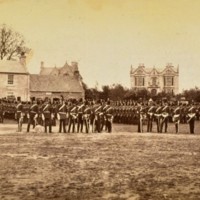 The Fife militia at Cupar in 1862. Until the 1790s Catholics were banned from serving in the county militias (which served on a part-time basis) or in the regular army. (Credit: University of St Andrews)