Browse Items (658 total)
Between the 1520s and the 1550s the Roman Catholic authorities in Fife severely punished a number of Protestant sympathisers. No less than four…
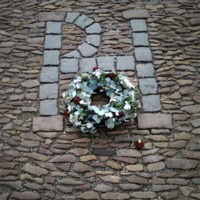 A wreath and the letters PH marking the site of Patrick Hamilton's execution on North Street in St Andrews. (Credit: Bess Rhodes)
The 1540s saw fighting between Scotland and England. The conflict was partly driven by the English government’s wish to arrange a marriage between…
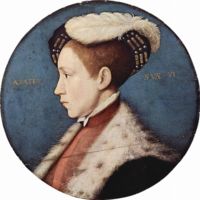 The young King Edward VI of England. Portrait perhaps by William Scrots. (Credit: The Met / Wikimedia)
The bishops of St Andrews had for centuries claimed to be the most important churchmen in Scotland. In 1472 their special status was officially…
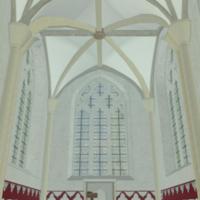 Reconstruction of the chapter house at St Andrews Cathedral in the late Middle Ages. (Credit: Open Virtual Worlds / University of St Andrews)
In the early 1430s a doctor named Pavel Kravar (sometimes known as Paul Craw in Scotland) was burned for heresy in the centre of St Andrews. Kravar…
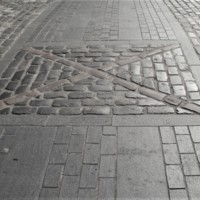 Pavel Kravar was burned at the stake beside the market cross in St Andrews. A saltire in the cobbles on Market Street shows where the cross once stood. (Credit: Bess Rhodes)
In 1349 the Black Death (probably a severe epidemic of bubonic plague) reached Fife. Churchmen were particularly likely to catch the disease as they…
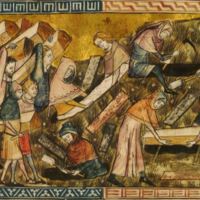 A fourteenth-century illustration of plague burials in Tournai. Similarly rushed burials probably took place in Fife. (Credit: Pierart dou Tielt / Wikimedia)
Like many religious orders, the Franciscans (or grey friars) grew slightly less strict over time. This concerned some people, and led to the…
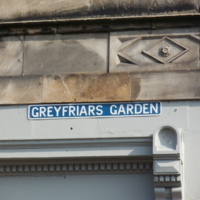 The street called Greyfriars Garden now covers where the Observant Franciscan friary once stood in St Andrews. (Credit: Bess Rhodes)
The fifteenth and early sixteenth centuries saw major building projects at many Fife churches. New churches were built and old ones remodelled. The…
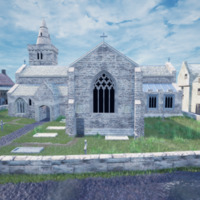 Reconstruction showing the possible appearance of the parish church of Holy Trinity in St Andrews, c.1559. (Credit: Open Virtual Worlds / University of St Andrews)
During the late Middle Ages universities increasingly took over responsiblity for higher education. In 1410 a group of churchmen established a…
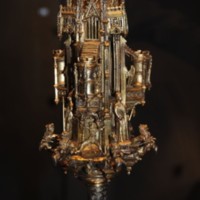 The ceremonial mace of St Salvator's College (one of the three colleges at the medieval University of St Andrews). The mace was commissioned by Bishop James Kennedy in 1461. (Credit: Sam Taylor / University of St Andrews)
In the 1360s King David II spent a large amount of money rebuilding the church at St Monans. The king did this because in 1346 he had survived being…
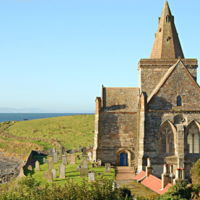 The medieval church at St Monans built by David II. (Credit: Jim Bain / Wikimedia)
During the thirteenth century some people felt that monasteries had become too wealthy. In response new religious orders of friars were created. The…
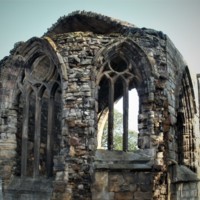 Remains of the late medieval church of the Dominican friars in St Andrews. (Credit: Bess Rhodes)
The origins of the close connection between St Andrew and the people of Scotland go back into the early Middle Ages. However, during the wars between…
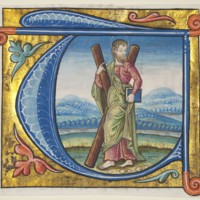 A late medieval image of St Andrew with his traditional X-shaped cross. (Credit: University of St Andrews)
Queen Margaret (the wife of Malcolm III) seems to have been regarded as a saint by the residents of Fife soon after her death in 1093. Miracles were…
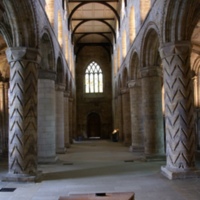 The medieval nave of Dunfermline Abbey. Dunfermline was the main burial place for the Scottish royal family from the time of Margaret's death until the early fourteenth century. (Credit: Otter / Wikimedia)
In 1215 the Fourth Lateran Council officially declared the Roman Catholic Church’s belief in the doctrine of purgatory. This was the idea that most…
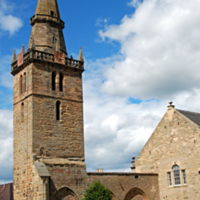 The tower of the old parish church of St Michael at Cupar. St Michael’s was one of the many churches rebuilt in Fife during the late Middle Ages, partly to make space for more chapels and side altars for masses for the dead. (Credit: Jim Bain / Wikimedia)
In the 1160s work began on a grand new cathedral at St Andrews (to replace the smaller church now known as St Rule’s which was then in use). The new…
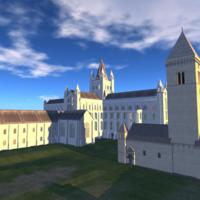 Reconstruction of St Andrews Cathedral in 1318. The older church of St Rule can be seen on the right. (Credit: Open Virtual Worlds / University of St Andrews)
King David I (one of the sons of Margaret and Malcolm III) supported major changes in the Scottish Church. He increased the number of bishops and gave…
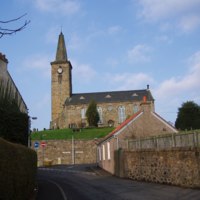 The parish church at Markinch. The church tower is thought to have been built during the reign of David I. (Credit: Mcwesty / Wikimedia)
The late eleventh and early twelfth centuries saw a wish for monks to follow stricter rules. A number of new religious orders such as the Cluniacs and…
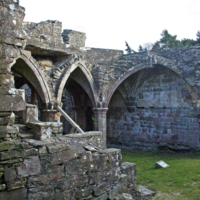 The ruins of the chapter house at the former Cistercian monastery at Balmerino. (Credit: Ed Marin / Wikimedia)
Around 1070 King Malcolm III’s wife Margaret (later known as St Margaret of Scotland) brought a group of Benedictine monks to Dunfermline. The…
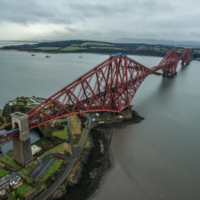 The Forth Bridge seen from the air near North Queensferry. The Victorian railway bridge crosses the Forth close to the route of Queen Margaret’s historic ferry. (Credit: Open Virtual Worlds / University of St Andrews)
By the tenth century St Andrews had become one of the most important churches in the kingdom of the Scots. In 965 the brother of the King of Tara died…
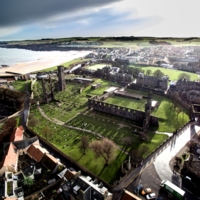 The medieval religious precinct at St Andrews viewed from the air. (Credit: Open Virtual Worlds / University of St Andrews)
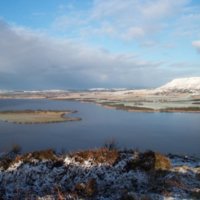 St Serf's Inch on Loch Leven. This island was home to an early Culdee community. (Credit: Mike Pennington / Wikimedia)
In the ninth and tenth centuries a new monastic movement known as the Céli Dé arrived from Ireland. Céli Dé means servants of God and is sometimes…
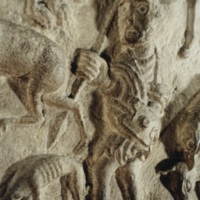 Detail of a hunting scene on the St Andrews Sarcophagus. (Credit: University of St Andrews)
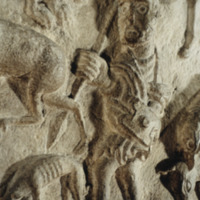 Reject - Detail St And Sarc
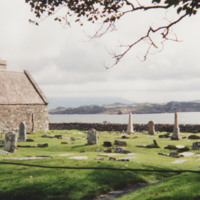 St Oran's Chapel on the island of Iona. (Credit: Libasstref / Wikimedia)
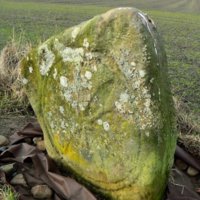 Early Christian carvings on the Skeith Stone. (Credit: James Allan / Wikimedia)
Since the sixteenth century there had been no cardinals resident in Scotland. However, in 1969 Gordon Gray, the Roman Catholic Archbishop of St…
In the late 1960s the General Assembly of the Church of Scotland agreed that women could be ordained as ministers on the same terms as men. The first…
St Andrews was an important religious centre from an early date. There seems to have already been a monastery here in 747 when the death of the abbot…
The seventh and eighth centuries saw increasing conversion of the Picts (who then inhabited Fife and much of Scotland north of the Forth).…
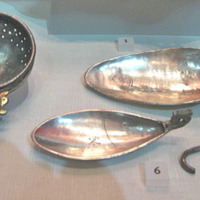 Two spoons with Christian symbols from a hoard found at Traprain Law, probably dating from about 410 AD. (Credit: Tyssil / Wikimedia)
Silver from the Traprain Law Treasure, East Lothian, Scotland. Bowls of river spoons.
The earliest evidence for Christianity in Fife comes from Christian symbols on carved stones and in caves. Early examples include the carvings on the…
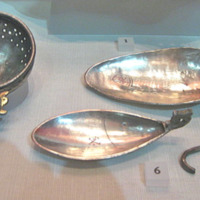 c.300 – 400 Arrival of Christianity in Scotland
Christianity was introduced to Southern Scotland during the Roman occupation of Britain. It is possible that some Christian communities survived the…
In May 1930 Dysart House, first built in 1756, was sold to Mrs Elsa af Wetterstedt Mitchell, and a month later she gifted it to the trustees for the…
Following the Great Disruption in 1843, the minister of Dysart, John Thomson, and a large part of the congregation joined the Free Church. Their first…
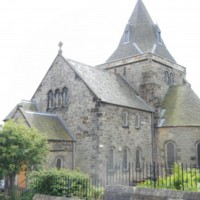 Dysart St Clair Parish Church (Source: Richard Fawcett, 2012)
In 1802-03 a new parish church was constructed in Dysart and the congregation moved from St Serf’s in an event known locally as the year of the big…
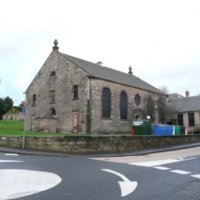 Dysart Barony Church (Source: Richard Fawcett, 2012)
The Anti-Burgher Congregation in Dysart was formed in 1747. In the early years they met in an old barn before constructing their own church in 1763 at…
A congregation belonging to the Relief Church was founded in Dysart sometime in the 1760s. In 1772 they opened their own church, which later became…
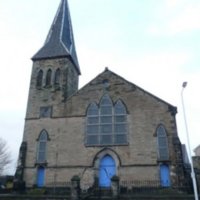 United Presbyterian Church, Normand Road (Source: Stuart Mee, Dec. 2007)
A chapel dedicated to St Denis/Denys, one of the patron saints of France, is thought to have been located at Pan Ha' in Dysart. Writing in 1794,…
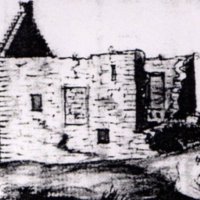 1780 drawing of the chapel. (Source: Anne Watters, Kirkcaldy's Churches: Brief Histories)
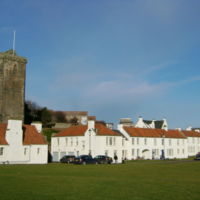 St Serf’s Tower and the Pan Ha (Source: Creative Commons)
The church of St Serf in Dysart first appears in the documentary record in the 1220s, although it is clear that it had existed long before then. In…
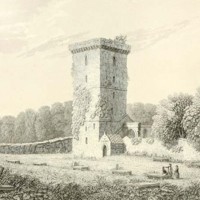 (1) Engraving of the Old Church of St Serf’s, 1853 (Source: William Muir, ed, Notices of the Local Records of Dysart (Glasgow: Maitland Club 1853), p. 22.
St Serf’s Cave in Dysart has been connected to that important local saint since the early middle ages. Serf had dedications across Western Fife,…
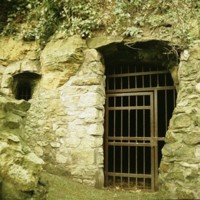 Dysart, St Serf's Cave (Source: R. Fawcett)
 Pre historic map key
The priory of May was founded by David I, sometime around the year 1140. It was dedicated to St Ethernan, and was affiliated to a mother house located…
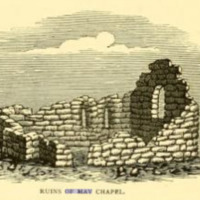 Sketch of the Ruins of the May chapel, 1869 (Source: Mathew Conolly, Fifiana: or Memorials of the East of Fife (Glasgow, 1869), p. 204)
The Isle of May was an important early Christian site which included a chapel and shrine from at least the ninth century, and probably earlier. The…
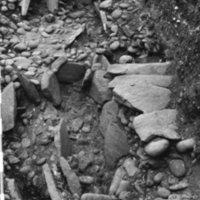 Long- Cist Burial, Isle of May (Source: RCAHMS)
The parish church of Cellardyke was constructed in 1882. Two years earlier the arrival of a new minister at the parish church of Kilrenny led to a…
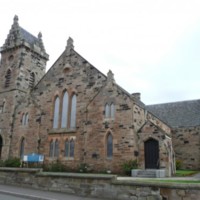 Cellardyke Parish Church (Source: © Copyright 2021, SCHR Ltd)
Following the Great Disruption in 1843, the minister of Anstruther Easter, William Ferrie, joined the Free Church, taking around 300 of his…
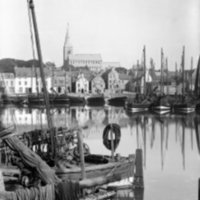 Chalmers Memorial Church c.1890 (Source: Erskine Beveridge Collection)
The Congregationalist Church in Anstruther was formed in around 1800, following preaching in the town by James Haldane and Joseph Rate in 1798. They…
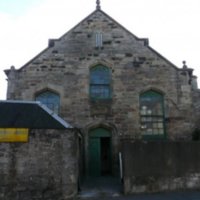 Anstruther Evangelical Church (2007) (Source: © Copyright 2021, SCHR Ltd)
The church was formed following a visit to the town by James Haldane in 1812, and meetings were held thereafter in the building known as the…
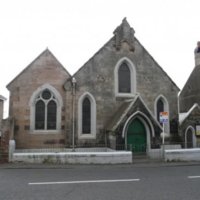 Anstruther Baptist Church (2007) (Source: © Copyright 2021, SCHR Ltd)
In 1818 applied to join the In 1820 the Burgher Presbytery of Perth granted a group called the Managers of the Associate Society of Anstruther £20 to…
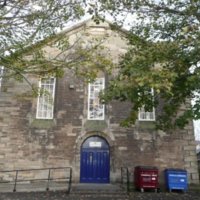 Anstruther Erskine United Free Church (2007) (Source: © Copyright 2021, SCHR Ltd)
In 1641 Anstruther Easter was separated from Kilrenny and became the smallest parish by area in Scotland at the time. Construction of a church begun…
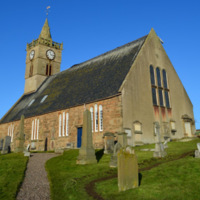 Anstruther Easter, St Adrian’s (Source: © Copyright Richard Sutcliffe and licensed for reuse under this Creative Commons Licence)
Anstruther Easter was part of the parish of Kilrenny until 1634, but by the later middle ages it was home to a growing fishing community. At some time…
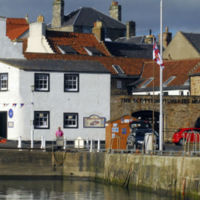 Former site of Chapel of St Ayle in Anstruther Easter (Source: Creative Commons)
The parish church of Anstruther Wester is first documented in 1225 when it was under the patronage of the monks of Isle of May. Dedicated to St…
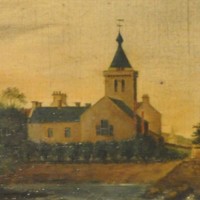 Anstruther St Nicholas, 1844, Taylor (Source: R. Fawcett)
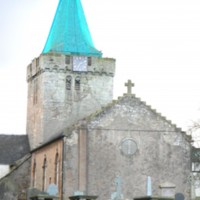 Anstruther Church, exterior, from south east (Source: R. Fawcett)
The Caves of Caiplie, or the Coves as they are known locally, are found about 3 miles to the east of Anstruther. They are natural caves carved in the…
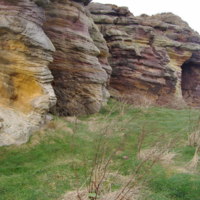 Caiplie Coves
Until the late nineteenth century the people of North Queensferry worshipped in Inverkeithing or Dunfermline. The first parish church was built in…
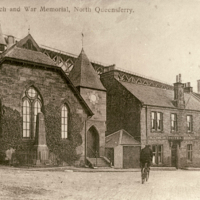 Church and War Memorial, North Queensferry
In 1855 Robert Robertson, a local linen merchant, purchased a former inn and converted it into a Meeting House for the villagers of North Queensferry.…
The chapel of St James first enters the documentary record in the early fourteenth century, but it was likely to have been founded sometime in the…
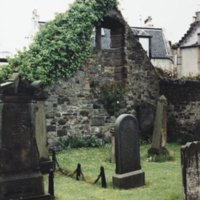 View of the West Gable of the Chapel of St James (Source: Farrell, Stuart, 1998)
In 1913, nearly four centuries after the Protestant Reformation, a Roman Catholic congregation returned to Inverkeithing area with the foundation of…
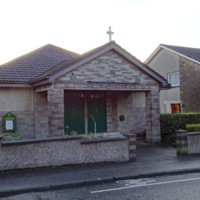 St Peter-in-Chains, Hope Street, Inverkeithing (Source: Creative Commons)
In the early 1900s a revival moment swept through Fife and led to the formation Inverkeithing’s Baptist Church. A mission was first planted in the…
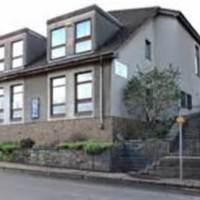 View of site from north east. (Source: Amanda Gow (August 2007), © Copyright 2021, SCHR Ltd. All rights reserved. Please contact us for permission to use this image.
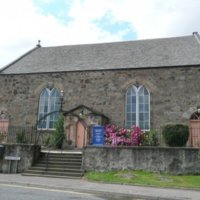 The Church of St John (Source: Amanda Gow, 2007) © Copyright 2021, SCHR Ltd. All rights reserved. Please contact us for permission to use this image.