Browse Items (658 total)
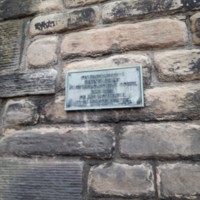 Plaque outside the Parish Church of Inverkeithing (Source: Tom Turpie)
 Point of Interest Key
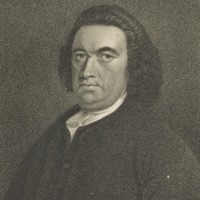 Portrait of John Glas, the founder of the Glasites. (Credit: National Galleries of Scotland)
 Pre historic map key
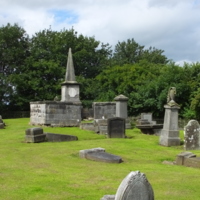 Pre-Ref Methil Church
The site of the pre-Reformation Methil Parish Church, now part of Methilmill Cemetery.
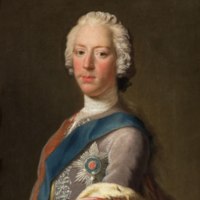 Prince Charles Edward Stuart, also known as the Young Pretender. Portrait by Allan Ramsey. (Credit: National Galleries of Scotland / Wikimedia)
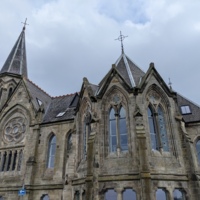 PXL_20230404_141947661.jpg
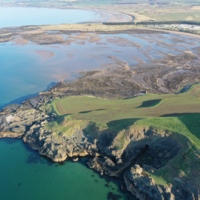 Raised beach platforms, Kingcraig
Overview of raised beach platforms at Kingcraig near Elie, Fife
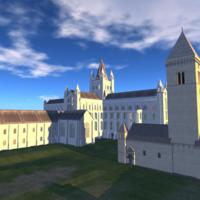 Reconstruction of St Andrews Cathedral in 1318. The older church of St Rule can be seen on the right. (Credit: Open Virtual Worlds / University of St Andrews)
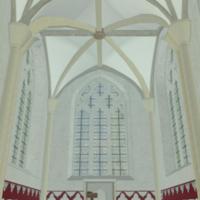 Reconstruction of the chapter house at St Andrews Cathedral in the late Middle Ages. (Credit: Open Virtual Worlds / University of St Andrews)
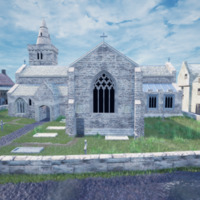 Reconstruction showing the possible appearance of the parish church of Holy Trinity in St Andrews, c.1559. (Credit: Open Virtual Worlds / University of St Andrews)
 Reject - Detail St And Sarc
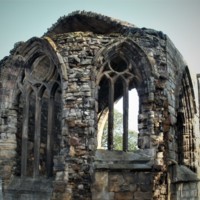 Remains of the late medieval church of the Dominican friars in St Andrews. (Credit: Bess Rhodes)
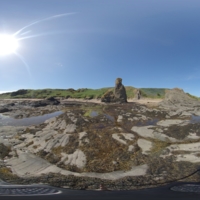 Rock and Spindle
The Rock and Spindle geological site
The Rock and Spindle is an ancient volcanic vent, and it has an excellent example of radial columnar jointing (it looks like spokes of a wheel) due to…
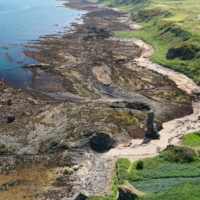 Rock and Spindle overvivew
Overview of Kinkell Ness with Rock and Spindle
The early nineteenth century saw major divisions in the Church of Scotland over secular interference in religious affairs. In the 1840s a large number…
This bay doesn’t actually have rubies, it’s named after the tiny red garnets in the sand which look a bit like rubies to the untrained eye. You might…
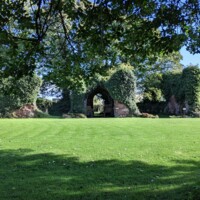 Ruins of Lindores Abbey. This photograph looks across what would once have been the cloister. (Source: Open Virtual Worlds / University of St Andrews)
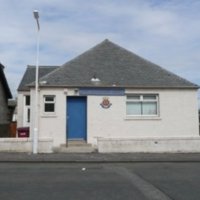 Salvation Army (Source: Amanda Gow, 2007)
The Salvation Army started a corps in St Andrews in 1893. After some difficulties in the early years, there was a continuous Salvation Army presence…
A corps of the Salvation Army was first launched in Buckhaven in 1897, fell into abeyance and but was re-founded in 1936. They met in Mullin Hall…
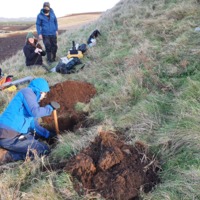 Sampling Platforms, Kingcraig
Sampling the platform sections at Kingcraig point for OSL dating
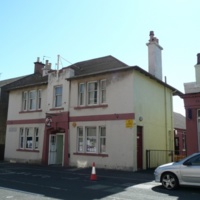 Scottish Coast Mission (Source: Places of Worship in Scotland)
The Scottish Coastal Mission, founded in 1850, was a Protestant organisation dedicated to ministering to sailors and maritime communities. By 1861…
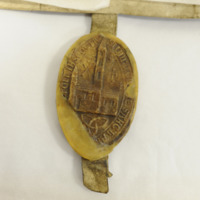 Seal of St Andrews Cathedral Priory showing St Rule’s Church. The now demolished nave and west frontage can be seen on the left side of the seal. (Source: University of St Andrews Library)
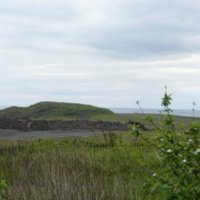 Site of Buckhaven Links Church (Source: Amanda Gow, 2007)
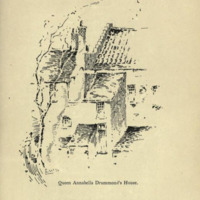 Sketch of ‘Annabella Drummond’s House’, 1894 (Source: John Geddie, The Fringes of Fife (Edinburgh, 1894), p. 41)
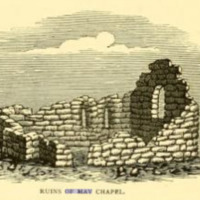 Sketch of the Ruins of the May chapel, 1869 (Source: Mathew Conolly, Fifiana: or Memorials of the East of Fife (Glasgow, 1869), p. 204)
A Church of Scotland ‘chapel at ease’ was built in what is now Church Street in West Wemyss in 1835. It was intended to save the villagers the long…
Nearly four centuries after the Protestant Reformation, a Roman Catholic congregation returned to Methil with the opening of a church in 1903. Located…
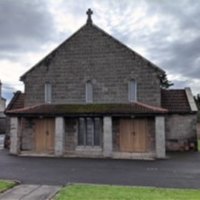 St Agatha’s Roman Catholic Church, Methil (Source: Bess Rhodes)
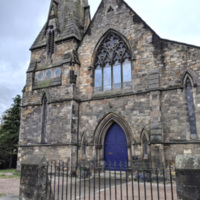 St Andrew's Church, Leven
Current use: residential.
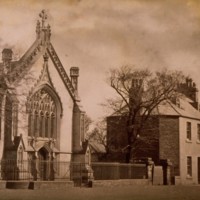 St Andrew's Episcopal Chapel on North Street in St Andrews in about 1865. Not long after this photograph was taken the episcopal congregation moved to a larger church on Queen's Terrace which is still in use today. (Credit: University of St Andrews)
In 1690 Scotland officially became a Presbyterian country, rejecting episcopacy (or the government of the church by bishops). Some Scots did not…
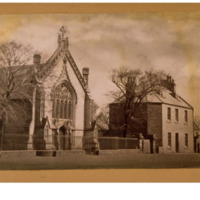 St Andrew’s Chapel in about 1865. (Source: University of St Andrews Library, ALB-10-62. Available at: https://collections.st-andrews.ac.uk/item/st-andrews-chapel-st-andrews/43875 )
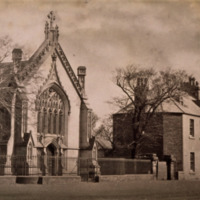 St Andrew’s Chapel in about 1865. (Source: University of St Andrews Library, ALB-10-62.)
After the Great Disruption of 1843, adherents of the Free Church in Buckhaven initially attended the church in East Wemyss, before the decision was…
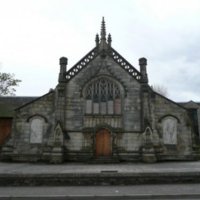 St Andrew’s Church, Buckhaven (Source: Amanda Gow, 2007)
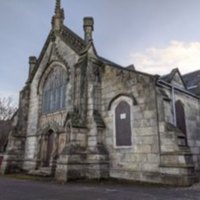 St Andrew’s Church, Buckhaven (Source: Bess Rhodes, 2021)
St Andrew’s Church was built to replace a smaller Episcopal church (also dedicated to St Andrew) which once stood on North Street. The foundations for…
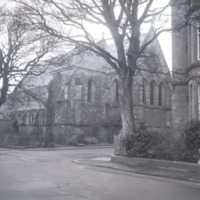 St Andrew’s Episcopal Church in about 1955. Photograph by George Cowie. (Source: University of St Andrews Library, GMC-29-20-4. Available at: https://collections.st-andrews.ac.uk/item/st-andrews-episcopal-church-queens-terrace-st-andrews/585969)
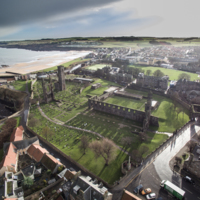 St Andrews
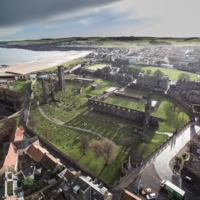 St Andrews
St Andrews (Latin: S. Andrea(s); Scots: Saunt Aundraes; Scottish Gaelic: Cill Rìmhinn) is a town on the east coast of Fife in Scotland, 10 miles (16…
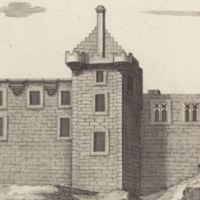 St Andrews Castle at the end of the seventeenth century. The windows of the castle chapel (with their quatrefoil tracery) can be seen to the right of the fore tower. (Source: John Slezer, ‘The Ruins of the Castle of St Andrews’, Theatrum Scotiae (1693). Available at: http://digital.nls.uk/slezer/engraving.cfm?sl=15)
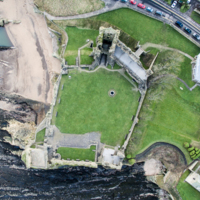 St Andrews Castle seen from the air. Before the Reformation the castle was the residence of the Archbishops of St Andrews. (Credit: Open Virtual Worlds / University of St Andrews)
St Andrews Cathedral was once the most important church in Scotland. It was the base for the country’s senior bishopric and housed the relics of…
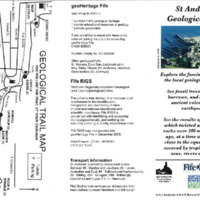 St Andrews Geological Trail
Geological field guide to St Andrews.
Carboniferous volcanic vent, Kinkell Ness has at its centre the Rock and Spindle
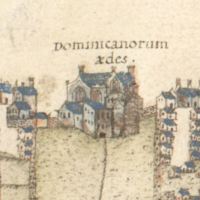 St Andrews’ Dominican friary shortly after the Reformation. (Source: John Geddy, ‘S. Andrew sive Andreapolis Scotiae Universitas Metropolitana’. NLS, MS.20996. Available at: http://maps.nls.uk/towns/rec/215)
During the late Middle Ages a chapel dedicated to St Anna (the grandmother of Jesus) stood on the north side of North Street. St Anna’s Chapel was…
Anstruther Easter was part of the parish of Kilrenny until 1634, but by the later middle ages it was home to a growing fishing community. At some time…
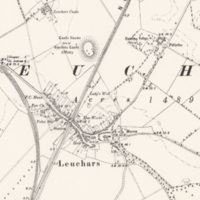 St Bonach’s Chapel
It is thought that a medieval chapel, possibly dedicated to St Bonach, once stood not far from the current site of Leuchars Parish Church. The chapel…
Following the Great Disruption in 1843, the minister of Dysart, John Thomson, and a large part of the congregation joined the Free Church. Their first…
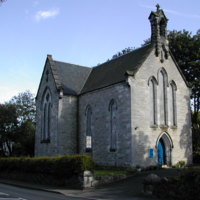 St Columba’s Episcopal Church, Aberdour
Towards the end of the 1840s the Free Church congregation in Crail built a church on the road then known as Jockeys Port (now called St Andrews Road).…
By 1869, the congregation of the United Presbyterian Church on Buckhaven Links took the decision to construct a new, larger, place of worship on…
The Isle of May was an important early Christian site which included a chapel and shrine from at least the ninth century, and probably earlier. The…
The priory of May was founded by David I, sometime around the year 1140. It was dedicated to St Ethernan, and was affiliated to a mother house located…
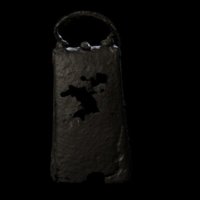 St Fillan's Bell
Early Christian hand-bell formerly kept and used in St Fillan’s Church, Struan (near Blair Atholl), Perthshire, and possibly associated with that…
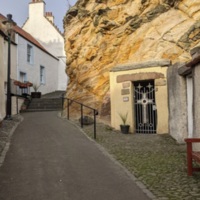 St Fillan's Cave, Pittenweem
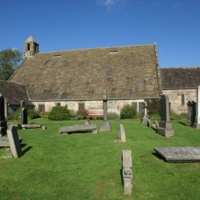 St Fillan's Church 20100930 from the south
St Fillan's Church, Aberdour, Fife, Scotland. View from the south.
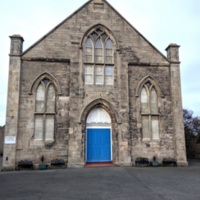 St Fillan's Church Pittenweem / Pittenweem Relief Church / Parish Church Hall
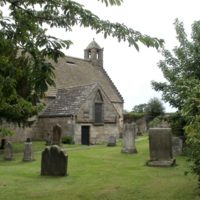 St Fillan's Church, Aberdour (Source: Bess Rhodes 2021)
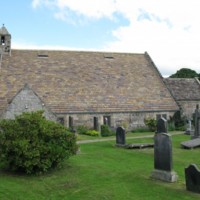 St Fillan's Church, Aberdour (Source: Richard Fawcett, 2012)
 St Fillan's Roman Catholic Church, Newport
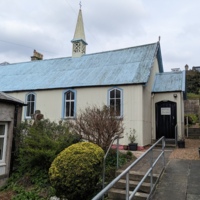 St Fillan's Roman Catholic Church, Newport
St Fillan’s Roman Catholic Church in Newport-on-Tay is a rare surviving example of a so-called ‘tin tabernacle’ – in other words a church built out of…
The parish church of Aberdour first appears in the records in the twelfth century when it was the subject of a dispute between a local lord, William…
St Fort disused sand and gravel quarry on the Wormit esker.
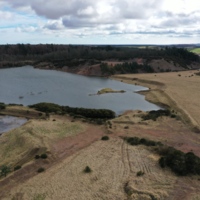 St Fort Quarry
Aerial view of St Fort sand and gravel quarry
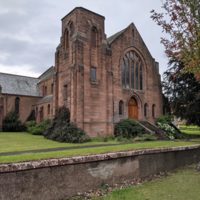 St George’s Church, East Wemyss (Source: Bess Rhodes, 2021)
At the Great Disruption in 1843 a large group of the congregation of East Wemyss parish church broke away and joined the Free Church. They began…
Following the Reformation the authorities in St Andrews (like many other Scottish towns) prosecuted Roman Catholics. This meant that for several…
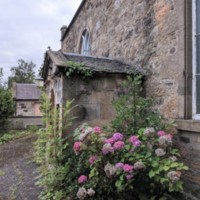 St John's Church in Inverkeithing has its origins in an eighteenth-century burgher congregation. In 1847 the congregation of St John's joined the United Presbyterians. The congregation later became Church of Scotland. (Credit: Open Virtual Worlds / University of St Andrews)
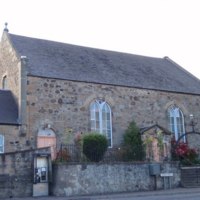 St John's Church in Inverkeithing has its origins in an eighteenth-century burgher congregation. In 1847 the congregation of St John's joined the United Presbyterians. The congregation later became Church of Scotland. The building now serves as the parish church for Inverkeithing. (Credit: Graeme Smith / Wikimedia)
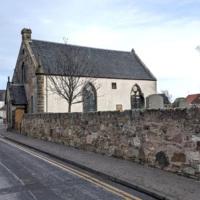 St John's Episcopal Church
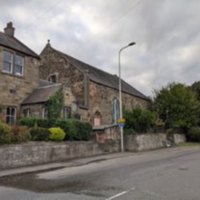 St John's, Inverkeithing (Source: Bess Rhodes)
St John’s was founded in 1752 following a split within the congregation of St Peter’s parish church over the choice of a minister by right of…
For several centuries St Katherine’s Church (which was formerly located on the north side of the High Street) served as Newburgh’s parish church. The…
There were some Episcopalian families in Newburgh in the eighteenth century. However, they do not appear to have had an official place of worship. In…
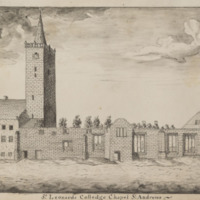 St Leonard’s Chapel after 1761. The chapel was then in ruins and being used to grow shrubs, although the (now demolished) college tower was still standing. (Source: University of St Andrews Library, OLI-15. Available at: https://collections.st-andrews.ac.uk/item/st-leonards-chapel/93063)
St Leonard’s Chapel has a long and varied history. The Culdees may have had a pilgrim hospital on this site in the Early Middle Ages. In the 1140s the…
The parish of St Leonard’s has its origins in the Middle Ages. However, the congregation has only worshipped in the current St Leonard’s Church on…
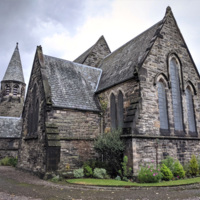 St Margaret of Scotland Episcopal Church, Leven